Turning Seized Assets into Liquid Capital
Expertly managed asset recovery auctions provide a critical lifeline for creditors like banks, SACCOs, and microfinance institutions in Kenya. This regulated process is the final step in converting repossessed collateral—such as vehicles, machinery, and other movable assets—into cash to settle non-performing loans. For buyers, these auctions present an opportunity to purchase assets at competitive market prices. A successful auction hinges on a meticulous process covering legal repossession, accurate valuation, strategic marketing, and transparent execution. Swipe Recoveries Experts Ltd is a leader in this field, offering end-to-end solutions for financial institutions seeking to maximize returns from their secured assets through compliant and effective public auctions.
Governing Legislation: The Auctioneers Act & Movable Property Security Rights Act
The entire process of asset recovery auctions is strictly governed by Kenyan law to protect the rights of all parties: the creditor (chargee), the debtor (chargor), and the auction purchaser. The primary statute is The Auctioneers Act (Cap 526) and its supporting Rules. This law dictates the licensing of auctioneers, the legal procedure for repossession (often requiring a court order), the mandatory 45-day notification period that must be given to the debtor before an auction, and the precise manner in which the public auction must be advertised and conducted.
For movable assets like vehicles and equipment, the Movable Property Security Rights Act, 2017 is equally important. This Act provides the legal basis for using movable assets as collateral and outlines the creditor's rights upon default. It details the procedures for taking possession of the asset and the right to dispose of it to recover the debt. Crucially, it emphasizes the creditor's duty to obtain the best price reasonably obtainable. This makes professional valuation and widespread advertising, as conducted by Swipe Recoveries, not just good practice but a legal necessity to mitigate claims of underselling the asset.

The Step-by-Step Procedure for Asset Recovery Auctions
The asset recovery auction process is systematic and must be followed precisely. Step 1: Instruction & Legal Compliance Check. A creditor instructs us to recover and sell a secured asset. We first verify all loan documentation and ensure all pre-repossession legal notices have been served correctly.
Step 2: Repossession & Valuation. Our licensed agents carry out the physical repossession of the asset in a professional and lawful manner. Immediately after, the asset is transported to a secure yard. A certified valuer is then engaged to conduct an independent valuation to determine the current market value and the forced sale value, which will inform the reserve price.
Step 3: Statutory Notification & Advertising. As required by the Auctioneers Act, a formal notification of sale is sent to the debtor, giving them a final opportunity to redeem the asset by paying the outstanding balance. Concurrently, we prepare and place advertisements in national newspapers, detailing the assets for sale, viewing dates, and auction details to attract a wide pool of potential buyers.
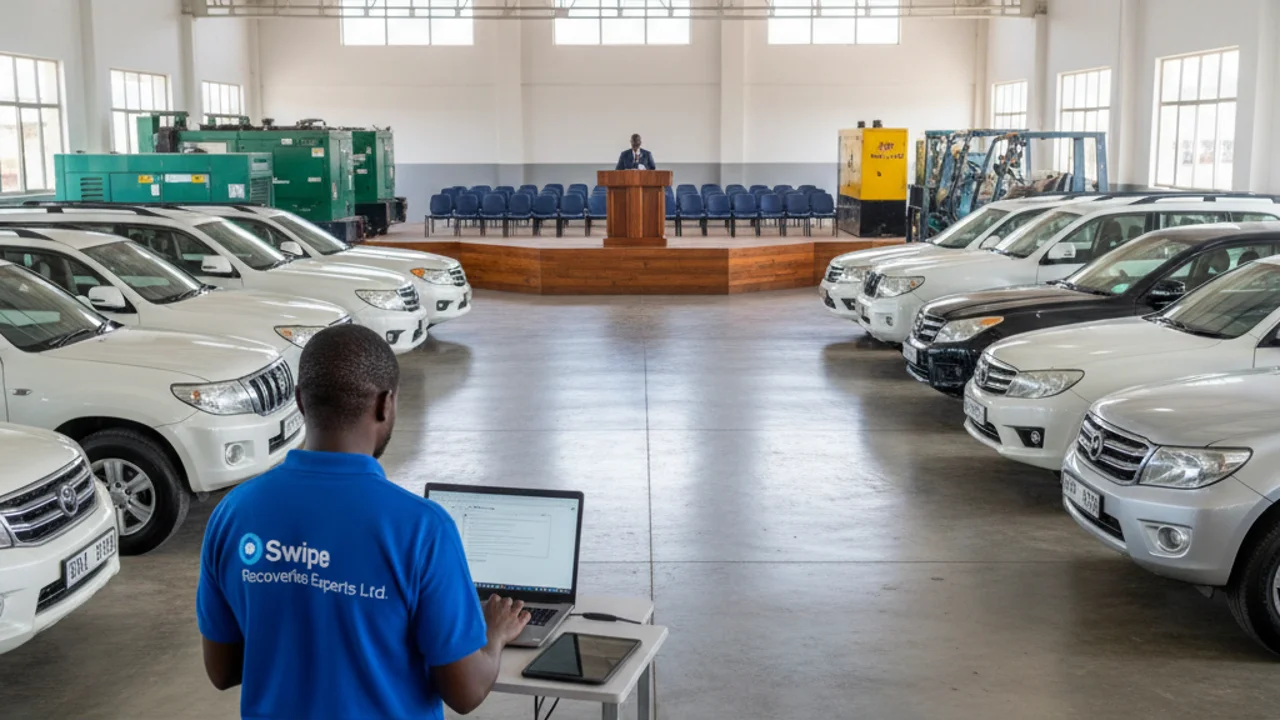
Step 4: The Public Auction. On the auction day, registered bidders place their bids. The asset is sold to the highest bidder at or above the reserve price. The successful bidder typically pays a deposit (e.g., 25%) immediately, with the balance due within a short, specified period. Once full payment is received, the proceeds are used to settle the debt, and any surplus is returned to the debtor.
Auction Fees, Costs, and Maximizing Your Returns

The costs associated with asset recovery auctions are deducted from the sale proceeds. These include the auctioneer's fees, which are legally stipulated in the Auctioneers Rules as a percentage of the sale price. For example, for movable goods, the commission is typically 10% on the first KES 100,000, 7% on the next KES 900,000, and so on. Other costs include repossession fees, yard storage fees (charged per day), valuation fees (e.g., KES 5,000 - KES 15,000 for a standard vehicle), and advertising costs.
Despite these fees, a well-managed auction is the most effective way to maximize recovery. By ensuring wide advertisement and a competitive bidding environment, we strive to achieve a sale price that is as close to the market value as possible. For creditors, this means recovering a larger portion of the outstanding loan. For example, selling a repossessed vehicle for KES 800,000 instead of KES 650,000 through a poorly advertised process makes a significant difference, easily covering the professional fees and increasing the net recovery amount.