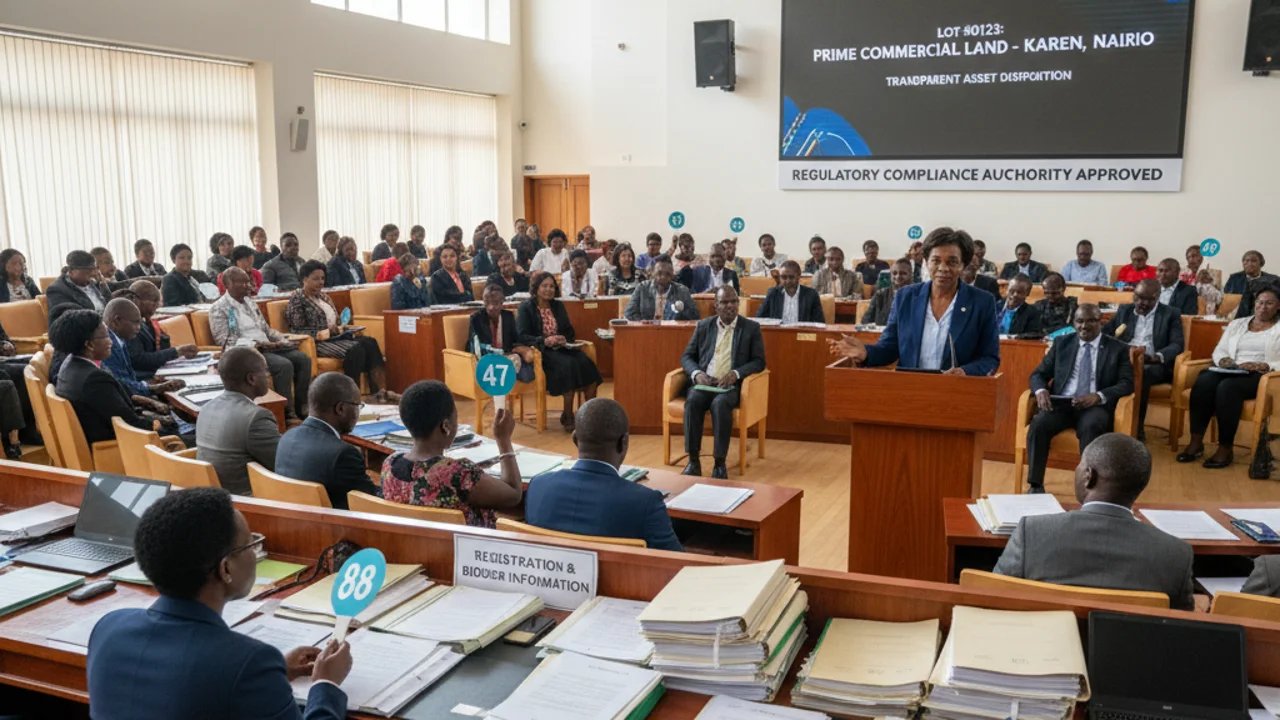
Understanding the Real Estate Foreclosure Process in Kenya
Navigating Real Estate Foreclosure Kenya requires a deep understanding of local laws and procedures to ensure a compliant and effective outcome. Foreclosure is the legal process by which a lender (chargee) takes possession of and sells a mortgaged property (chargor's land) to recover outstanding debt when the borrower defaults on their loan obligations. This complex process is governed by specific statutory frameworks designed to protect both parties. Swipe Recoveries Experts Ltd specializes in providing innovative, tailored solutions for chargees and chargors, offering comprehensive guidance and diligent execution to navigate these challenges with dedication at the core of every engagement.
Legal Framework for Real Estate Foreclosure in Kenya
The legal foundation for real estate foreclosure in Kenya is primarily enshrined in the Land Act, 2012 (specifically Sections 90-96) and the Land Registration Act, 2012. These statutes delineate the conditions under which a chargee can exercise its statutory power of sale. Before initiating foreclosure, a chargee must serve specific notices to the chargor. According to Section 90(1) of the Land Act, a 3-month redemption notice must be issued, warning the chargor of the intention to sell if the default is not remedied. This notice is a critical legal requirement and must adhere to strict timelines and content specifications to ensure compliance. Failure to issue proper notice can render the entire foreclosure process null and void, leading to costly legal challenges. Furthermore, Section 97 of the Land Act mandates that property must be valued by a registered valuer before sale, and the sale must be at market value. The sale can proceed via public auction or private treaty, but strict adherence to the Auctioneers Act and associated regulations is paramount. Professional bodies like the Institution of Surveyors of Kenya (ISK) play a role in setting valuation standards. Understanding these legal nuances is crucial for both chargees seeking to recover funds and chargors attempting to understand their rights and potential remedies. Legal proceedings may involve the Environment and Land Court, which has jurisdiction over land matters in Kenya.

Step-by-Step Foreclosure Procedure and Documentation
The step-by-step procedure for real estate foreclosure in Kenya is intricate and demands meticulous attention to documentation and statutory compliance. First, upon loan default, the chargee issues an initial demand for payment. If the default persists, a statutory notice (often referred to as a Section 90 Notice or Form D) is served, giving the chargor three months to rectify the breach. Simultaneously, the chargee must commission a valuation report from a registered valuer to establish the property's market value and reserve price. This is a non-negotiable step to avoid undervaluation claims. Following the expiry of the statutory notice, and if the default remains unaddressed, the chargee may instruct a licensed auctioneer to advertise the property for sale. Advertisements typically appear in local newspapers of wide circulation, specifying details of the property, the auction date, and terms of sale. The sale itself can be a public auction or a private treaty, but in both scenarios, the price must not be less than 75% of the forced sale value (as per Section 97(2) of the Land Act) unless otherwise agreed by the parties or directed by the court. Key documents required throughout this process include the original charge document, all statutory notices served, the valuation report, the auctioneer's sale advertisement, the auctioneer's licence, and ultimately, the transfer forms. Each stage demands precise execution to withstand legal scrutiny and ensure the rightful transfer of the property.
Debt Recovery & Auctioneering Coverage in Kenya
Swipe Recoveries Experts Ltd provides commercial recovery, skip tracing, and auctioneering services across Kenya and all 47 counties in Kenya.
Costs, Fees, and Practical Considerations for Foreclosure in Kenya

The financial implications of real estate foreclosure in Kenya extend beyond the outstanding debt, encompassing various costs and fees. Legal fees for advocates typically follow the Advocates (Remuneration) Order, Cap 16, and can range significantly based on the complexity and value of the property, often being a percentage of the debt or property value. Valuation fees, crucial for establishing the market and reserve price, usually range from 0.25% to 1% of the property's value, with a minimum fee often set at KES 10,000-25,000, depending on the valuer and property type. Auctioneer's fees are also statutorily regulated, often calculated as 2.5% on the first KES 100,000 and 1.25% on the residue up to KES 5,000,000, plus expenses like advertisement costs (which can range from KES 5,000 to KES 50,000 depending on media and frequency). Other practical considerations include the potential for delays due to legal challenges by the chargor, the need for environmental impact assessments for certain properties, and managing tenant issues if the property is occupied. The entire process, from first default notice to property transfer, can take anywhere from 6 months to several years, underscoring the importance of expert management to mitigate risks and streamline recovery. Swipe Recoveries Experts Ltd provides clear cost estimations and ensures efficient management of these processes.