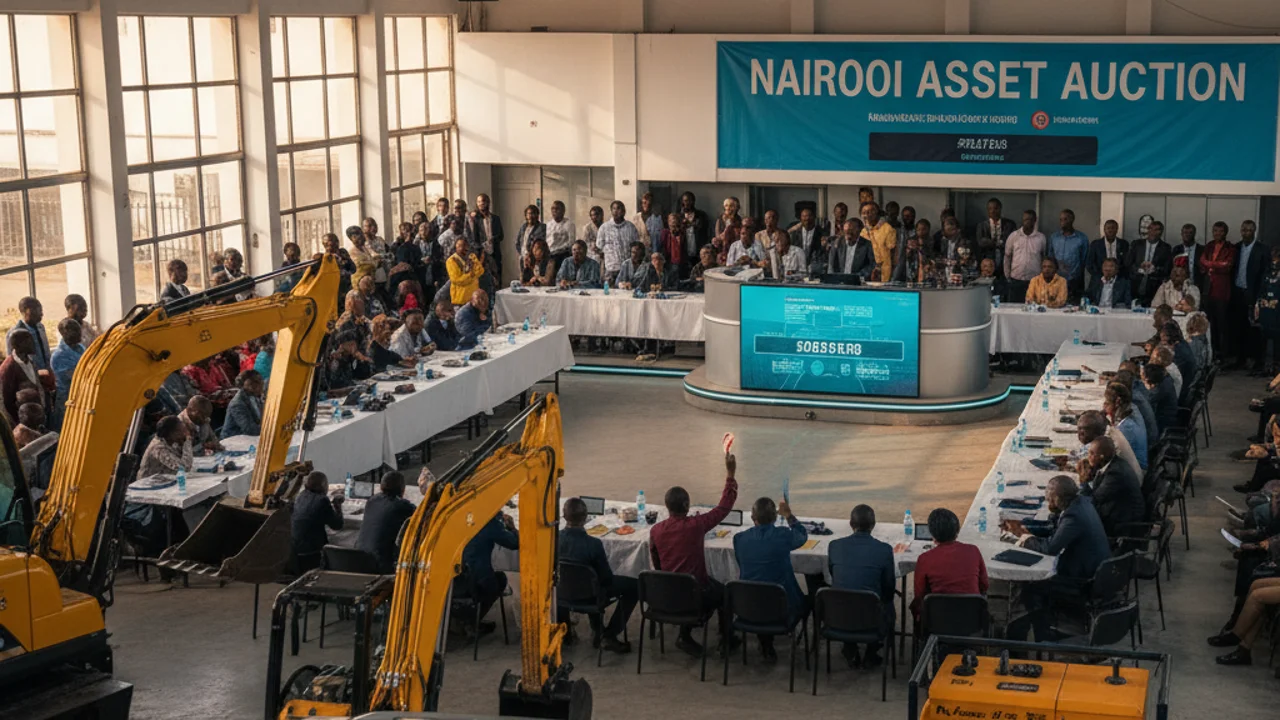
Strategic Recovery for Secured NPLs
Effectively managing property non-performing loans (NPLs) is a critical challenge for financial institutions across Kenya. When loans secured by real estate default, they can severely impact a lender's liquidity and balance sheet health, a concern frequently highlighted by the Central Bank of Kenya (CBK). The process of recovering value from these assets, known as realisation, is intricate and heavily regulated. At Swipe Recoveries Experts Ltd, we provide a specialised, end-to-end service for lenders, including banks, SACCOs, and microfinance institutions, to navigate the complexities of property NPLs. We ensure a compliant, efficient, and maximising recovery process, turning distressed assets back into liquid capital.
The Regulatory Landscape: Land Act, Banking Act & CBK Guidelines
The recovery of property non-performing loans is governed by a robust legal framework designed to protect both the lender (chargee) and the borrower (chargor). The Land Act, 2012 is the cornerstone legislation, outlining the chargee's statutory power of sale. Section 90 of the Act mandates the issuance of a specific statutory notice, giving the borrower a prescribed period to remedy the default. Failure to issue this notice correctly can render any subsequent recovery action, including an auction, illegal and void.
Simultaneously, financial institutions must adhere to the prudential guidelines set by the Central Bank of Kenya (CBK) under the authority of the Banking Act. These guidelines dictate how NPLs are classified, provisioned for, and managed. The process must be transparent and fair. Once the legal right to sell arises, the Auctioneers Act and its Rules come into force, governing every aspect of the public auction, from the property valuation and advertisement requirements to the conduct of the sale itself. Our expertise lies in integrating these three pillars of regulation to create a legally unassailable recovery strategy.

The Property Realisation Process for NPLs: A Step-by-Step Guide
The journey from a defaulted loan to a successful asset sale is a multi-step process requiring meticulous execution.
1. Issuance of Statutory Notice: As per Section 90 of the Land Act, a 90-day notice is served on the borrower. This notice must be in the prescribed format and served correctly. If the default persists, a further 40-day notice to sell is issued under Section 96.
2. Forced Sale Valuation: Before the sale, the lender must obtain a current valuation of the property from a licensed valuer. This is to ensure the property is not sold at a price that undervalues the asset, protecting the borrower's remaining interest.
3. Advertisement & Notification of Sale: Following the notice period, the sale must be advertised publicly, typically in newspapers with nationwide circulation. The advertisement must include all pertinent details of the property and the auction date, time, and venue, as required by the Auctioneers Rules.
4. Public Auction: The auction is conducted by a licensed auctioneer on the specified date. The property is sold to the highest bidder, provided the bid meets the reserve price. Swipe Recoveries Experts Ltd manages this entire process, ensuring full compliance and maximising the sale value for our clients.
Costs Associated with Recovering Property NPLs (KES)

Budgeting for the recovery of property non-performing loans is essential for financial institutions. The costs can be broken down into several categories. Valuation fees are guided by the Valuers Act and the scale of fees from the Institution of Surveyors of Kenya (ISK), typically a percentage of the property's value. For a property valued at KES 10 million, the valuation fee could be in the range of KES 50,000 - KES 80,000.
Legal fees for drafting and serving the statutory notices can range from KES 20,000 to KES 100,000 or more, depending on the law firm and complexity. The largest cost component is often the Auctioneer's fees, which are strictly regulated by the Auctioneers Rules. These fees are calculated on a sliding scale based on the sale price. For example, on a successful sale of KES 10 million, the commission could be around KES 300,000, plus costs for advertisement, storage (if applicable), and other disbursements. We provide our clients with a detailed cost projection to ensure complete financial clarity throughout the engagement.