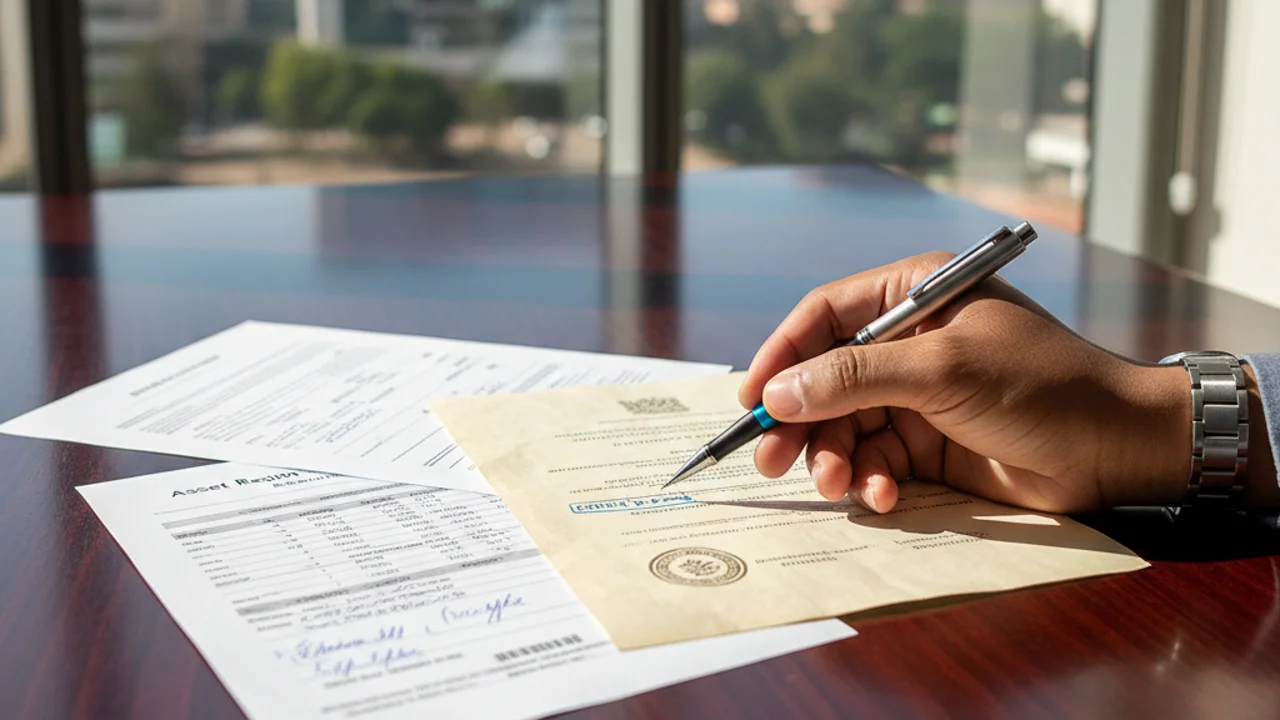
Navigate Property Repossession with Specialized Expertise
When financial obligations tied to real estate default, engaging specialized property repossession experts becomes critical for lawful and efficient recovery. Repossessing property in Kenya, whether it's land or built structures, is a highly regulated process governed by the Land Act, 2012, and the Land Registration Act, 2012. Any misstep can lead to protracted legal battles, significant financial loss, and reputational damage. Swipe Recoveries Experts Ltd offers unparalleled expertise in navigating the complexities of charge enforcement, ensuring compliance with every statutory requirement. Our team based in International Life Hse, Nairobi, provides end-to-end solutions, from issuing demand notices to conducting a lawful sale by public auction.
The Legal Framework for Property Repossession in Kenya
Property repossession in Kenya is primarily governed by the Land Act, 2012, specifically Part VII on 'Dispositions in Land,' and the Land Registration Act, 2012, which dictates the procedures for registering and dealing with interests in land. These statutes empower a chargee (lender) to exercise remedies, including the statutory power of sale, when a chargor (borrower) defaults on their obligations. Crucially, the law mandates strict adherence to notice periods and procedural requirements before repossession can occur.
For instance, Section 90 of the Land Act, 2012, requires a notice to be served, specifying the nature and extent of default and giving a minimum of three months for the chargor to remedy the breach. Failure to comply with these notices renders any subsequent repossession and sale unlawful. Furthermore, the Auctioneers Act Cap 526 governs the public auction aspect of the sale process, while the Valuers Act, Cap 532, ensures independent valuation of the property. Swipe Recoveries Experts Ltd ensures meticulous compliance with every legal nuance, working closely with registered valuers and auctioneers regulated by the Law Society of Kenya (LSK) to protect our clients' interests.

The Repossession Procedure: A Step-by-Step Guide for Creditors
The property repossession process initiated by our property repossession experts follows a carefully orchestrated sequence to ensure legal compliance and maximize recovery. It commences with the issuance of a statutory demand notice to the defaulting chargor, allowing them a specific period (usually three months) to rectify the breach. This crucial step is followed by a formal 40-day notice to sell, signaling the intent to exercise the statutory power of sale. Throughout this period, our team engages in diligent communication, offering avenues for resolution and ensuring full disclosure as required by law.
If the default persists, we then proceed with securing an independent valuation of the property by a registered valuer, determining its open market value and forced sale value, as mandated by the Land Act, 2012. Subsequently, a registered and licensed auctioneer is engaged to facilitate a public auction, ensuring wide publicity for the sale. Swipe Recoveries Experts Ltd oversees the entire auction process, from preparing the conditions of sale to managing the transfer of ownership to the successful bidder. Our focus is on seamless execution, minimizing delays and ensuring that the entire procedure is conducted transparently and legally from our Nairobi CBD headquarters.
Cost Implications and Fee Structures for Property Repossession Services

Engaging property repossession experts involves various costs, which Swipe Recoveries Experts Ltd transparently outlines from the outset. Key cost components include legal fees for drafting and serving statutory notices and overseeing the legal aspects of the repossession process, typically ranging from KES 50,000 to KES 200,000, depending on complexity. Valuation fees, mandated by law, are typically a percentage of the property's value (e.g., 0.25%-0.5% for properties above KES 5 million) and are paid to the independent valuer. Auctioneer fees are also statutory, calculated as a percentage of the sale price (e.g., 2.5%-5% for the first KES 10 million, then decreasing percentage for higher values) upon successful sale.
Additional disbursements may include advertising costs for the auction, court filing fees if judicial intervention is required (e.g., for eviction orders or defending injunctions), and administrative expenses. Swipe Recoveries Experts Ltd's service fee for managing the entire repossession and sale process is usually a pre-agreed commission on the recovered amount or a fixed management fee, ensuring alignment with our clients' recovery goals. We strive to provide a detailed, itemized estimate before commencing any work, operating from our office in International Life Hse, Mama Ngina Street, Nairobi, to ensure clarity and trust.