Understanding the Financial Landscape of Property Repossession in Kenya
The intricacies of property repossession costs in Kenya can be daunting for both lenders and debtors. At Swipe Recoveries Experts Ltd, located at International Life Hse, 8th Floor, Mama Ngina Street, Nairobi, we understand the critical need for clarity and efficiency in debt recovery processes. We provide expert guidance on all financial implications, ensuring a transparent and legally compliant repossession procedure for our clients across the nation.
Legal Framework and Statutory Requirements Governing Property Repossession

Property repossession in Kenya is governed primarily by the Land Act 2012, particularly Sections 90-96, and the Auctioneers Act (Cap 526). These statutes outline the strict procedures lenders must follow before repossessing charged property. Key steps include serving statutory notices, such as the 3-month notice under Section 90 of the Land Act, followed by a 40-day notice of sale under Section 96. Failure to adhere to these provisions can invalidate the entire repossession process.
Furthermore, the process mandates the involvement of a licensed auctioneer, whose duties are detailed in the Auctioneers Act. A crucial requirement is obtaining a professional valuation report from an independent, registered valuer to determine the property's forced sale value, ensuring fairness. In contested cases, court intervention, usually through the High Court or Chief Magistrate's Court, may be necessary to obtain specific orders, adding layers of legal and procedural requirements. Compliance with these frameworks, as advised by legal professionals and entities like the Law Society of Kenya (LSK), is paramount to avoid legal challenges and ensure a successful repossession.
The Property Repossession Process: Steps, Documentation & Compliance
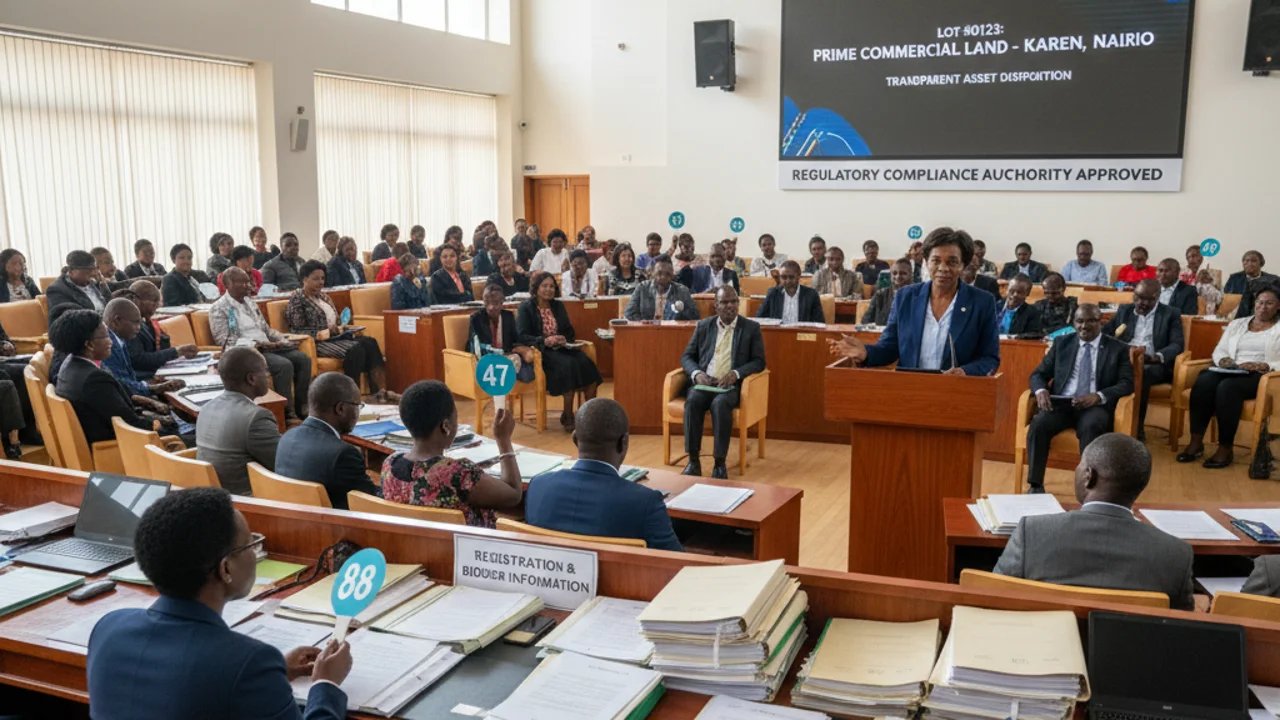
The property repossession process in Kenya involves several meticulous steps designed to protect both the lender and the borrower. It commences with the issuance of statutory notices, giving the borrower an opportunity to remedy the default. If the default persists, the lender instructs a licensed valuer to assess the property's value, which is critical for setting the reserve price at auction. Subsequently, a licensed auctioneer, appointed under the Auctioneers Act (Cap 526), issues a proclamation of sale, advertising the property for public auction.
Essential documentation includes the original charge document, all demand letters, the valuation report, the auctioneer's proclamation, and any relevant court orders if the matter progressed to litigation. Adherence to timelines and proper service of documents are non-negotiable compliance requirements. Financial institutions must also align with guidelines from the Central Bank of Kenya (CBK) regarding asset recovery. Swipe Recoveries Experts Ltd meticulously manages each stage, from initial notices to the final auction, ensuring full legal compliance and efficient execution for our clients.
Detailed Breakdown of Property Repossession Costs in KES
Understanding the potential property repossession costs is vital. These expenses vary based on the complexity and value of the property, but generally include:
1. Legal Fees: Ranging from KES 50,000 to KES 200,000+, these cover drafting notices, court appearances (if required), and general legal advice. Complex, litigious cases will incur higher fees.
2. Valuation Fees: Governed by the Valuers Act, these are typically a percentage of the property's forced sale value, often 1-2%, with a minimum ranging from KES 20,000 to KES 50,000 for standard properties. This ensures an independent assessment as per the Land Act 2012.
3. Auctioneer Fees: Regulated by the Auctioneers Act, these are typically tiered: 2.5% on the first KES 100,000 realized from the sale, and 1.25% on the remainder up to KES 1,000,000, with lower percentages for higher amounts. Minimum charges apply.
4. Publication & Advertising Costs: For public notices in newspapers and gazette, budget KES 10,000 to KES 50,000.
5. Security & Logistics: Costs for securing the property during repossession and auction can range from KES 10,000 to KES 30,000.
6. Court Filing Fees: If judicial intervention is necessary, these can be KES 5,000 to KES 20,000+.
Swipe Recoveries Experts Ltd provides a transparent breakdown of these costs, offering clear estimates to help you plan effectively and avoid unforeseen expenses in Nairobi and beyond.