Your Guide to Acquiring Repossessed & Seized Assets
Finding seized property for sale provides a remarkable opportunity for investors and homebuyers to acquire valuable assets, often below prevailing market rates. These properties—ranging from residential homes and commercial buildings to land and vehicles—are typically sold via public auction by licensed auctioneers like Swipe Recoveries Experts Ltd. The sale is usually initiated by a creditor, such as a bank, to recover a defaulted loan, or to satisfy a court order. Understanding the process is key to navigating these sales successfully and securing a great investment.
Understanding Why Property is Seized and Sold
Properties are seized and put up for auction for several reasons, all rooted in legal or financial obligations. The most common scenario is a bank foreclosure. When a borrower defaults on a mortgage, the lending institution (the chargee) exercises its 'statutory power of sale' under the Land Act to recover the outstanding loan balance. The property is sold to the highest bidder at a public auction.
Another major reason is the execution of a court order. If a person or company loses a civil case and fails to pay the judgment debt, the court can issue an order allowing the seizure and sale of their assets to satisfy the decree. This is managed by an auctioneer. Finally, under the Distress for Rent Act, a landlord can, through a licensed auctioneer, seize a tenant's movable goods (not land) to recover rent arrears. Swipe Recoveries Experts Ltd is frequently instructed by banks, law firms, and other creditors to handle these sensitive auction processes.

The Public Auction Process: A Step-by-Step Guide for Buyers
Participating in an auction for seized property for sale is a structured process governed by the Auctioneers Act (Cap 526). First, you must find the listings. By law, auction notices must be advertised in major national newspapers, such as the Daily Nation or The Standard. These notices detail the property, location, date, and time of the auction, and the terms of sale. Reputable firms like Swipe Recoveries also publish these listings on their websites.
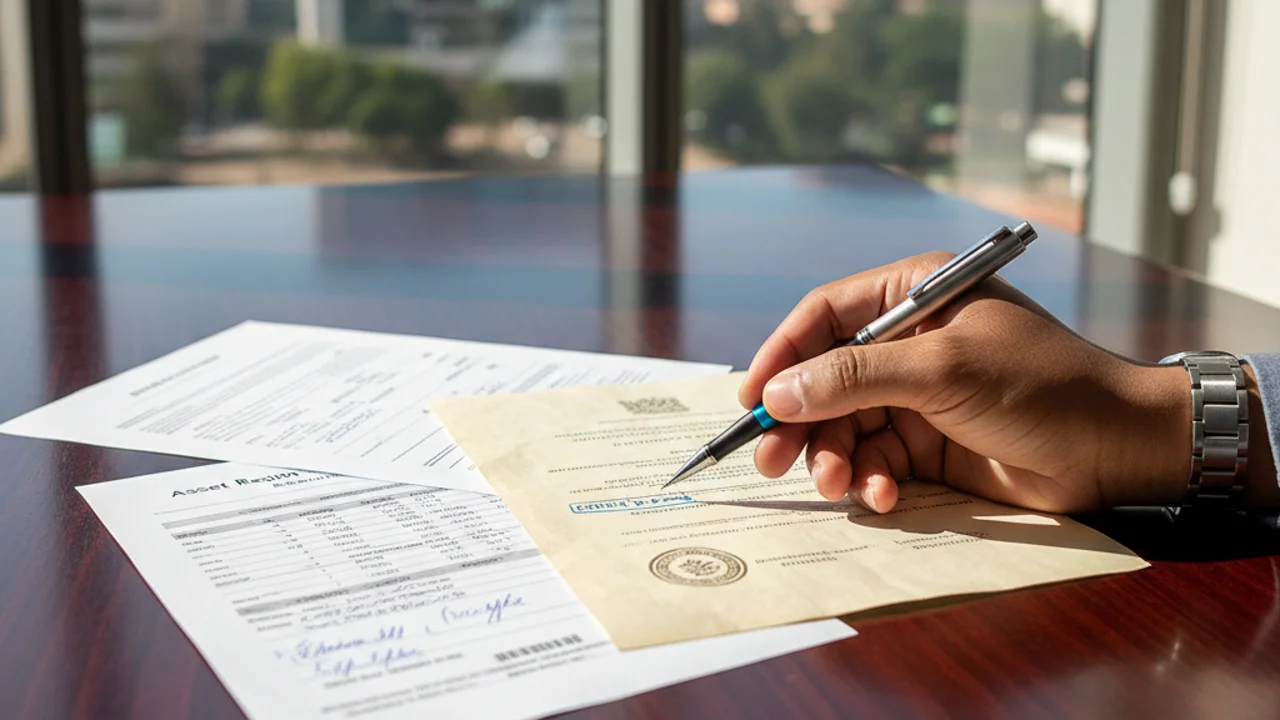
The next crucial step is due diligence. Before the auction day, prospective buyers should view the property and conduct an official search at the Land Registry to verify ownership and check for any encumbrances. On auction day, you must register as a bidder and may need to pay a refundable bid deposit, usually 10-25% of your intended bid amount, to get a bidding number. The auctioneer conducts the sale, and the property is sold to the highest bidder. The winning bidder signs the memorandum of sale and must pay the balance of the purchase price within a stipulated period, typically 30 to 90 days.
Costs, Fees, and Key Considerations for Buyers
When budgeting to buy seized property at an auction, the 'hammer price' is just the starting point. The most immediate cost is the deposit, which is payable on the spot. For a property sold at KES 10,000,000, you would need a banker's cheque for a deposit of approximately KES 1,000,000 to KES 2,500,000 depending on the conditions of sale.
After winning the bid, you are responsible for the balance of the purchase price. Additionally, you must factor in other statutory costs. These include stamp duty, which is 4% of the property's value in municipalities and 2% in other areas, as well as legal fees for the transfer process. It is vital to remember that properties are sold on an 'as-is, where-is' basis. This means the buyer accepts the property in its current condition, making pre-auction inspection and title searches absolutely essential.