Navigating Mortgage Default & Asset Recovery
The foreclosure legal procedure Kenya is a critical process for lenders to recover outstanding debts secured by immovable property, primarily land and buildings, when a borrower defaults on mortgage repayments. This complex legal avenue is strictly governed by the Land Act (2012) and the Land Registration Act (2012), designed to protect both the chargee's (lender's) and chargor's (borrower's) rights. Swipe Recoveries Experts Ltd offers unparalleled expertise in guiding financial institutions and private lenders through every stage of this procedure, ensuring statutory compliance and efficient asset recovery. Our services are tailored to mitigate risks and achieve favorable outcomes in the challenging landscape of Kenyan property law.
Statutory Frameworks Governing Mortgage Foreclosure
The bedrock of the foreclosure legal procedure Kenya lies within the Land Act (2012), particularly sections related to charges and remedies of a chargee, and the Land Registration Act (2012), which details the process of registering charges and transferring property. Under Section 90 of the Land Act, a chargee must serve a notice of default of at least three months, specifying the nature of the default and requiring rectification. Should the default persist, the chargee may exercise various remedies, including appointing a receiver, leasing the charged land, entering into possession, or most significantly, exercising the statutory power of sale. The Environment and Land Court (ELC) plays a pivotal role in overseeing these processes, especially when court intervention is sought to confirm the power of sale or address disputes. Compliance with the specified notice periods and procedures is not merely a formality; it is a fundamental prerequisite for a lawful foreclosure, as any deviation can render the entire process invalid and subject to legal challenge. The Central Bank of Kenya (CBK) also issues guidelines that impact how financial institutions manage non-performing loans and subsequently pursue recovery actions.

Detailed Steps in the Foreclosure Process
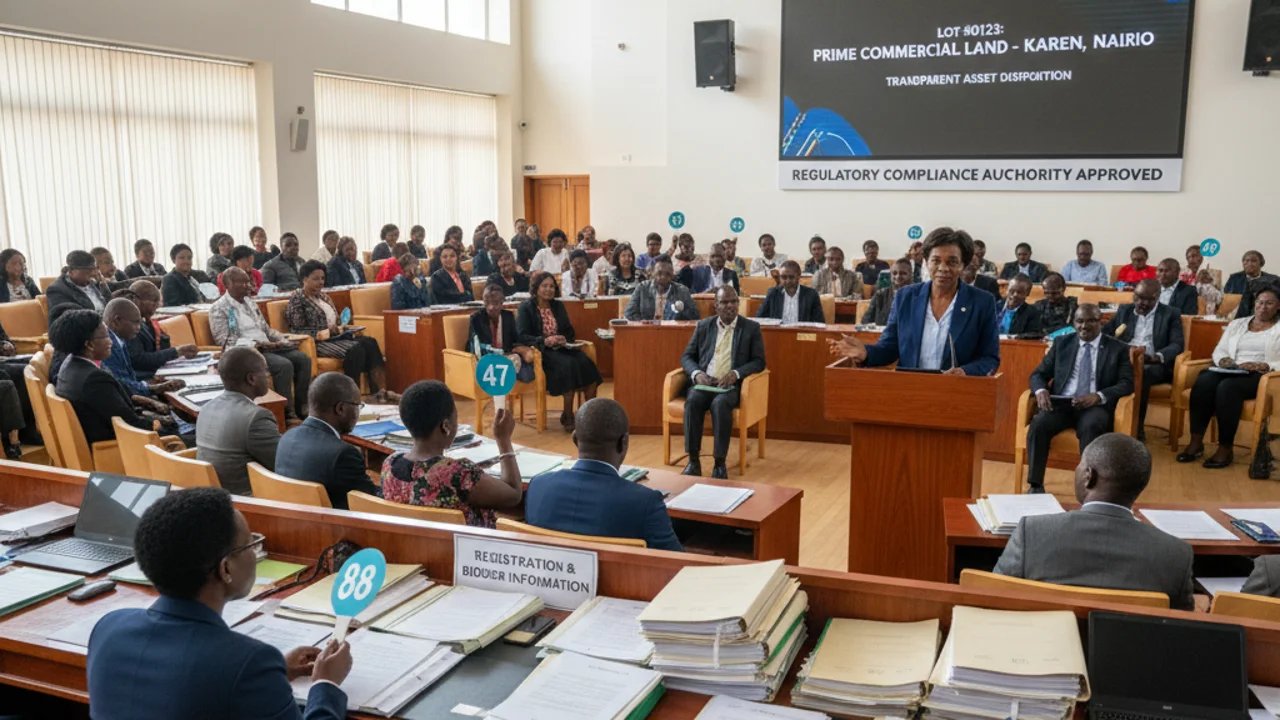
The foreclosure legal procedure Kenya meticulously outlines the steps a chargee must take. First, a written demand for payment must be served to the chargor. If the default persists, a mandatory three-month statutory notice under Section 90 of the Land Act (2012) is issued, giving the chargor an opportunity to remedy the breach. This notice must clearly state the amount due and the chargee's intention to exercise remedies if the default is not cured. If payment is still not made, the chargee may then issue a 40-day notice of intention to sell, as per Section 96 of the same Act. During this period, the chargor can apply to the Environment and Land Court for an injunction to stop the sale, typically if they can demonstrate that the chargee has not followed due process or if they can show willingness to settle. Should the sale proceed, it is conducted by a licensed auctioneer appointed by the chargee, following procedures similar to a legal process auction Kenya, including advertising in reputable newspapers (e.g., Daily Nation, The Standard) and conducting a valuation. Proper documentation, including certified copies of the charge, default notices, and proof of service, is essential at every stage.
Debt Recovery & Auctioneering Coverage in Kenya
Swipe Recoveries Experts Ltd provides commercial recovery, skip tracing, and auctioneering services across Kenya and all 47 counties in Kenya.
Financial Implications & Legal Costs for Foreclosure

The financial aspects of the foreclosure legal procedure Kenya can be substantial, affecting both the chargee and chargor. For the chargee, costs primarily include legal fees for drafting and serving notices, court filing fees (which can vary but typically range from KES 5,000 to KES 20,000 for initial applications), valuation fees (which can be KES 10,000 to KES 50,000+ depending on property value), and auctioneer's commissions (regulated by the Auctioneers Act Cap 526, generally 1.25% to 2.5% on immovable property). Advertising costs for the sale in national newspapers also add several thousands of KES. These costs are usually recoverable from the proceeds of sale. For the chargor, legal representation to challenge the foreclosure or negotiate terms can also incur significant legal fees. It is crucial for both parties to understand that the goal of the sale is to recover the outstanding debt, accrued interest, and costs. Any surplus proceeds must be paid to the chargor, while a deficit remains a personal debt. Swipe Recoveries Experts Ltd provides clear cost estimates and advises on strategies to minimize financial burdens.