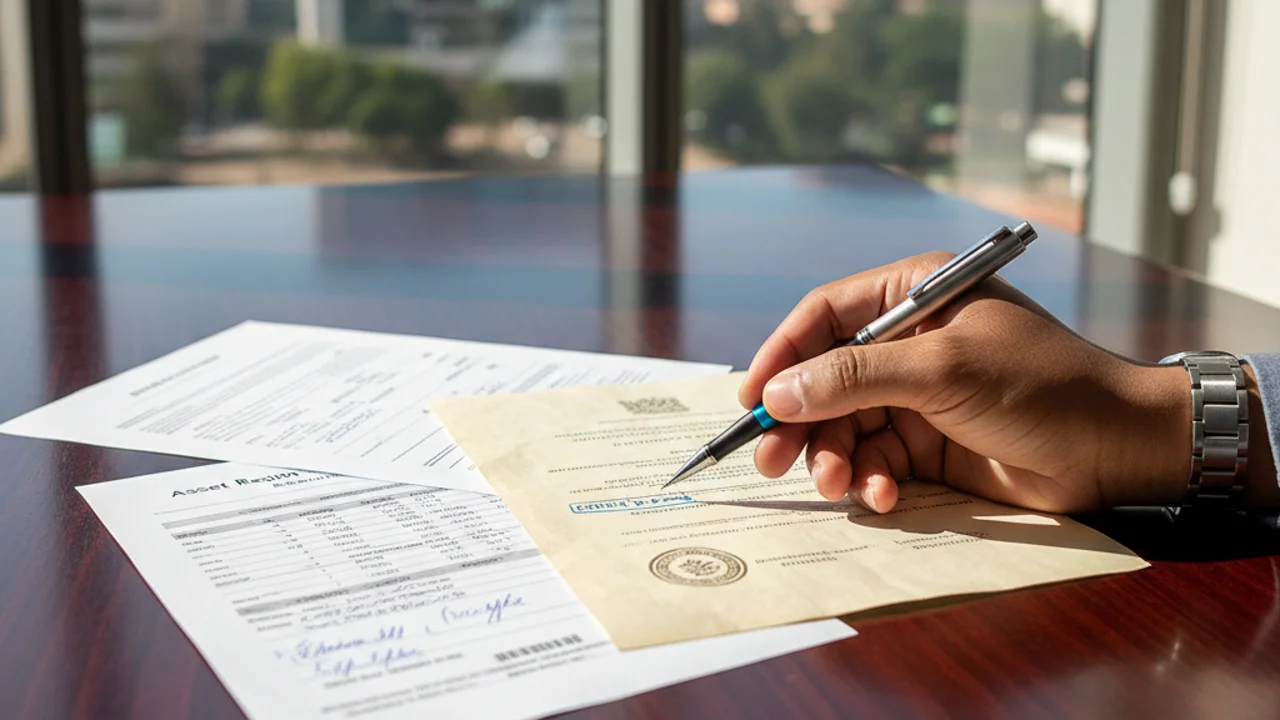
From Amicable Collection to Court Action
Understanding the legal procedures for debt recovery is essential when amicable negotiations have been exhausted. For creditors in Kenya, moving from polite reminders to formal legal action is a significant step that must be handled with precision to ensure a successful outcome. The process is governed by a strict set of rules and statutes, primarily the Civil Procedure Act (Cap. 21) and the Magistrate's Courts Act. A misstep can lead to delays or even dismissal of your claim. This guide outlines the official legal journey, from the critical first step of a demand letter to the final enforcement of a court judgment, providing clarity for businesses seeking to recover what they are owed. Swipe Recoveries Experts Ltd, located at International Life House in Nairobi, specializes in guiding clients through this complex maze.
The Foundation: Pre-Litigation Debt Recovery Procedures
The formal journey of legal debt recovery in Kenya does not begin in a courtroom. It starts with a Demand Letter. This is not just a formal request for payment; it is a critical legal document that serves as a prerequisite for filing a lawsuit. A properly drafted Demand Letter, often issued by an advocate or a specialized recovery agent, must clearly state the name of the debtor, the principal amount owed, any accrued interest, and a clear deadline for payment. It must also contain a clear 'intent to sue' clause, stating that legal proceedings will be commenced without further reference to the debtor if the payment is not made within the stipulated time, typically 7 to 14 days.
This document serves multiple purposes. Firstly, it demonstrates to the court that you provided the debtor with a final opportunity to settle the matter amicably before litigation. Secondly, it often prompts payment from debtors who realize the creditor is now serious about legal action. Under the Advocates Act, only a qualified advocate can issue a demand letter that threatens legal consequence in a way that carries full legal weight, and it forms a crucial part of the evidence (bundle of documents) you will file in court. Ignoring this foundational step can weaken your case from the outset.

Initiating Legal Action: The Kenyan Court System Explained
If the demand letter is ignored, the next step is to initiate a civil suit. This involves drafting and filing a Plaint at the appropriate court. The choice of court is determined by the pecuniary jurisdiction—the monetary value of the claim. The Small Claims Court is a fast-track option for simple debts up to KES 1 million, designed for quick resolution without complex procedures. For larger amounts, the claim is filed in the Magistrate's Court or the High Court of Kenya. The Plaint details the facts of the case, the amount claimed, and the legal basis for the claim. Once filed and stamped by the court registry, a filing fee is paid, calculated on a scale based on the value of the claim.
After filing, the court issues Summons to Enter Appearance. The Plaint and the Summons must then be legally served upon the debtor. Service is a critical step and must be done in accordance with the Civil Procedure Rules, often by a licensed court process server. The debtor then has a limited time, usually 15 days, to either pay the sum or 'enter appearance' and file a statement of defence. If the debtor fails to do either, the creditor can apply for a judgment in default, effectively winning the case without a full trial. If a defence is filed, the matter proceeds to pre-trial directions and eventually a full hearing.
Enforcement: Executing a Court Decree for Debt

Obtaining a court judgment (or 'decree') is a major victory, but it is not the final step. The debt is not recovered until the judgment is enforced, a process known as 'execution'. The Civil Procedure Act provides several methods to execute a decree. The most common is a Warrant of Attachment and Sale, where the court authorizes a licensed auctioneer to seize and sell the debtor’s assets (movable or immovable) to satisfy the debt. This directly links the legal process to the auctioneering services.
Another powerful tool is a Garnishee Order. Here, the court orders a third party who owes the debtor money (such as a bank or an employer) to pay that money directly to the creditor instead. This is highly effective for attaching funds in bank accounts. A more severe measure is the Notice to Show Cause, where the debtor is summoned to court to explain why they have not paid the judgment debt. Failure to provide a satisfactory reason can, in certain circumstances, lead to their committal to civil jail. Each of these procedures has associated costs, including court fees and auctioneer charges, which are typically added to the total amount recoverable from the debtor.