Decoding the Costs of Asset Repossession in Nairobi
Understanding the full spectrum of repossession Nairobi fees is crucial for any creditor seeking to recover assets efficiently and legally. The process involves more than just seizing an asset; it is governed by a strict legal framework that dictates costs, procedures, and timelines. Many creditors are surprised by the various charges that accumulate, from auctioneer's commission and proclamation costs to towing and storage fees. Failing to account for these expenses can erode the value of the recovered asset. This guide provides a comprehensive, authoritative breakdown of the typical costs involved in repossessing assets, particularly vehicles, within Nairobi, ensuring you can budget effectively and maintain compliance. At Swipe Recoveries Experts Ltd, we provide transparent, tailored solutions to manage these costs effectively, safeguarding your financial interests throughout the entire recovery engagement.
The Legal Framework Governing Repossession Fees in Kenya
The primary legislation governing repossession costs in Kenya is the Auctioneers Act, No. 5 of 1996, and its accompanying Auctioneers Rules. This legal framework is designed to protect both the creditor and the debtor by standardizing the procedures and capping the fees that a licensed auctioneer can charge. The Auctioneers Licensing Board (ALB) is the statutory body responsible for licensing and regulating all auctioneers in the country, ensuring they adhere to these rules. Any deviation from the stipulated fee schedule can result in disciplinary action against the auctioneer, including fines or license revocation.
Specifically, the Auctioneers Rules provide a detailed schedule of fees for various actions, such as issuing a proclamation notice, attaching movable property (like a vehicle), and the commission earned from a successful auction. For example, an auctioneer's charges are often calculated as a percentage of the debt owed or the value realized at auction. It is imperative for creditors to partner with a recovery firm that works exclusively with ALB-licensed auctioneers to ensure every action is legally defensible and the fees charged are compliant. This adherence to the law, including acts like the Movable Property Security Rights Act, 2017 which modernised security interests, is non-negotiable for a successful and challenge-free recovery.
Step-by-Step Repossession Process & Associated Costs
The repossession process in Nairobi follows a legally mandated sequence of events, each with its own associated cost. Understanding this timeline is key to forecasting the total expense.
1. Proclamation and Notice of Seizure: The first step is for a licensed auctioneer to issue a 'Proclamation Notice' to the debtor. This notice gives the debtor a specific period (usually 7 to 14 days) to settle the debt before the asset is attached. This step incurs a fee as stipulated in the Auctioneers Rules.
2. Attachment and Seizure: If the debt is not cleared, the auctioneer proceeds to 'attach' or seize the asset. This physical act of taking possession incurs another set of fees. It often requires obtaining a Warrant of Attachment from the court, adding a layer of legal costs.
3. Towing and Transportation: Once seized, the asset (e.g., a car or truck) must be transported to a secure storage facility. Towing fees in Nairobi can vary significantly based on the vehicle's location, condition, and size. This is a direct, out-of-pocket expense.
4. Secure Storage: The repossessed asset must be stored in a secure yard until it is either redeemed by the debtor or sold at auction. Storage yards charge a daily fee, which can accumulate quickly. These fees are a critical component of the overall repossession Nairobi fees.
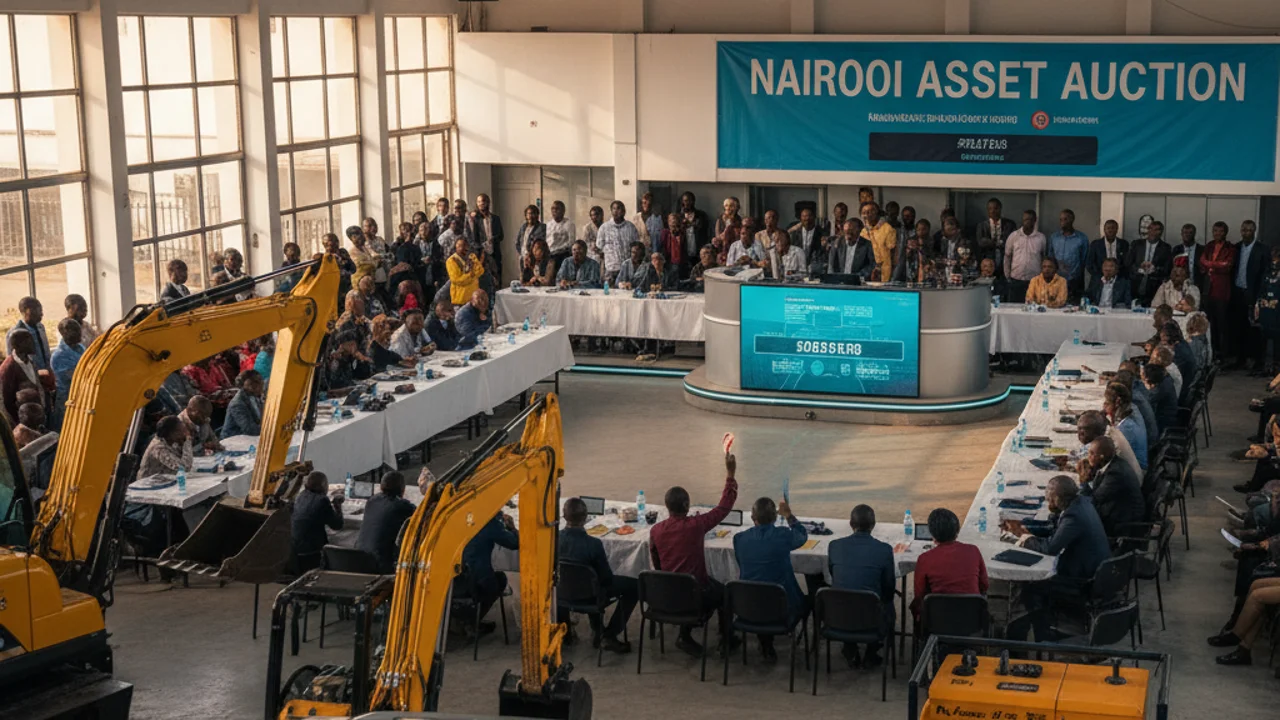
5. Auction and Sale: If the debtor fails to redeem the asset, it will be advertised for sale and sold at a public auction. The auctioneer earns a commission from the sale proceeds, which is also regulated by the Auctioneers Rules. Additional costs here include newspaper advertisement fees.
Debt Recovery & Auctioneering Coverage in Nairobi, Kenya
Swipe Recoveries Experts Ltd provides commercial recovery, skip tracing, and auctioneering services across Nairobi, Kenya and all 47 counties in Kenya.
A Detailed Breakdown of Repossession Fees in KES

To provide clarity, here is a practical estimate of the repossession Nairobi fees you can expect to encounter. Please note these figures are estimates and can vary based on the specific circumstances of the recovery, the value of the debt, and the type of asset.
Proclamation Fees: Typically ranges from KES 5,000 to KES 15,000, depending on the debt amount.
Warrant of Attachment & Legal Fees: Court filing and legal service fees can range from KES 10,000 to KES 30,000.
Towing & Transport Costs: Within Nairobi, expect to pay between KES 15,000 and KES 40,000. This is higher for commercial trucks or recoveries from remote locations.
Daily Storage Fees: A secure yard in Nairobi will charge approximately KES 1,000 to KES 3,000 per day.
Auctioneer’s Commission: This is a percentage of the value recovered. It is on a sliding scale, for example, up to 10% on the first KES 100,000, with the percentage decreasing as the value increases.
Advertisement Costs: Advertising the auction in a daily newspaper costs between KES 8,000 and KES 20,000.
At Swipe Recoveries Experts Ltd, we provide a detailed cost-benefit analysis before initiating any repossession. Our goal is to ensure the recovery is financially viable for you. We leverage our network of compliant service providers to negotiate competitive rates for towing and storage, helping you manage the total cost effectively.