Leveraging Auctions for Effective Debt Recovery
A debt recovery auction in Kenya is a powerful legal tool for creditors to reclaim outstanding funds by liquidating a debtor's assets. This formal process is not a simple seizure; it is the final step in a court-mandated procedure designed to enforce a legal judgment. Whether you are a business owed money for services or an individual with a court decree, using a licensed auctioneer is essential for a lawful recovery. Swipe Recoveries Experts Ltd specializes in the entire debt recovery lifecycle, from initial debt surveillance and skip tracing to executing a compliant and effective auction, ensuring creditors can finally realize the value of their legal claims.
The Legal Foundation: Civil Procedure & The Auctioneers Act
The authority for a debt recovery auction in Kenya stems from the successful conclusion of a court case, not from the debt itself. The governing law is the Civil Procedure Act (Cap. 21) and the detailed Civil Procedure Rules. The process begins when a creditor (the 'plaintiff') sues a debtor and obtains a 'judgment' from the court. This judgment is then formalized into a 'decree', a court order compelling the debtor to pay.
If the debtor fails to honour the decree, the creditor's advocate can apply to the court for 'execution' of the decree by requesting a 'Warrant of Attachment and Sale'. This warrant is the legal instrument that empowers a licensed auctioneer to seize and sell the debtor's property. The auctioneer's actions are then strictly governed by the Auctioneers Act, 1996 and its rules. This act dictates how assets are proclaimed, seized, advertised, and sold, ensuring the process is conducted fairly and transparently. It's a two-part legal structure: the court authorizes the recovery, and the auctioneer executes it according to specific regulations.

The Debt Recovery Auction Process: A Step-by-Step Walkthrough
Executing a debt recovery auction is a systematic process that must be followed without deviation to remain legally sound. Here is the step-by-step procedure for creditors in Kenya:
1. Obtain a Court Judgment & Decree: The first and most critical step is to have a valid court judgment and a certified decree against the debtor.
2. Apply for Warrants of Attachment: Your lawyer will apply to the court that issued the decree for Warrants of Attachment and Sale to be issued in the name of your chosen licensed auctioneer.
3. Instruct a Licensed Auctioneer: You formally instruct an auctioneer, like Swipe Recoveries Experts Ltd, providing them with the original warrants to execute.
4. Proclamation of Attachment: The auctioneer visits the debtor's premises and serves a 'Proclamation Notice'. This notice lists the assets earmarked for seizure and gives the debtor a set period (typically 7-14 days) to pay the debt to avoid removal of the goods.
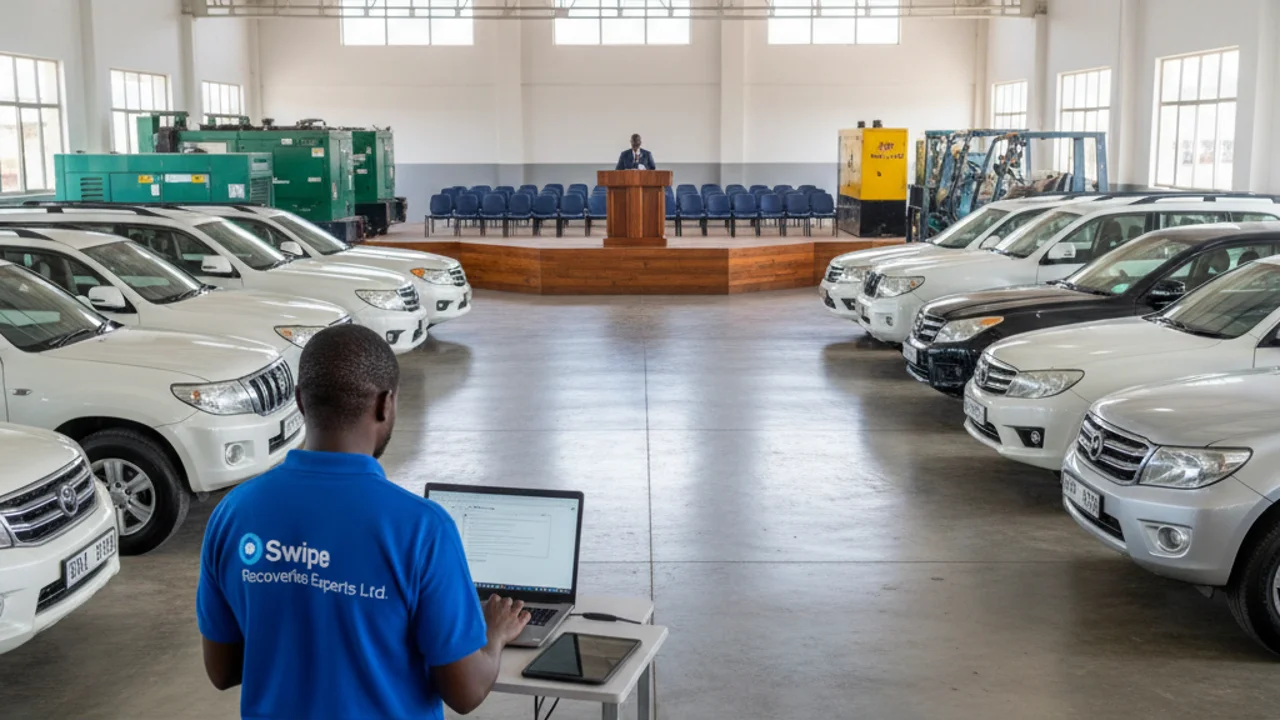
5. Attachment (Seizure) of Assets: If the debtor fails to pay, the auctioneer returns, often with police assistance, to seize the proclaimed assets. These are then transported to a secure storage yard.
6. Advertisement and Sale: For movable goods (like vehicles or office equipment), the auctioneer must advertise the sale in a newspaper for at least 7 days before conducting the public auction.
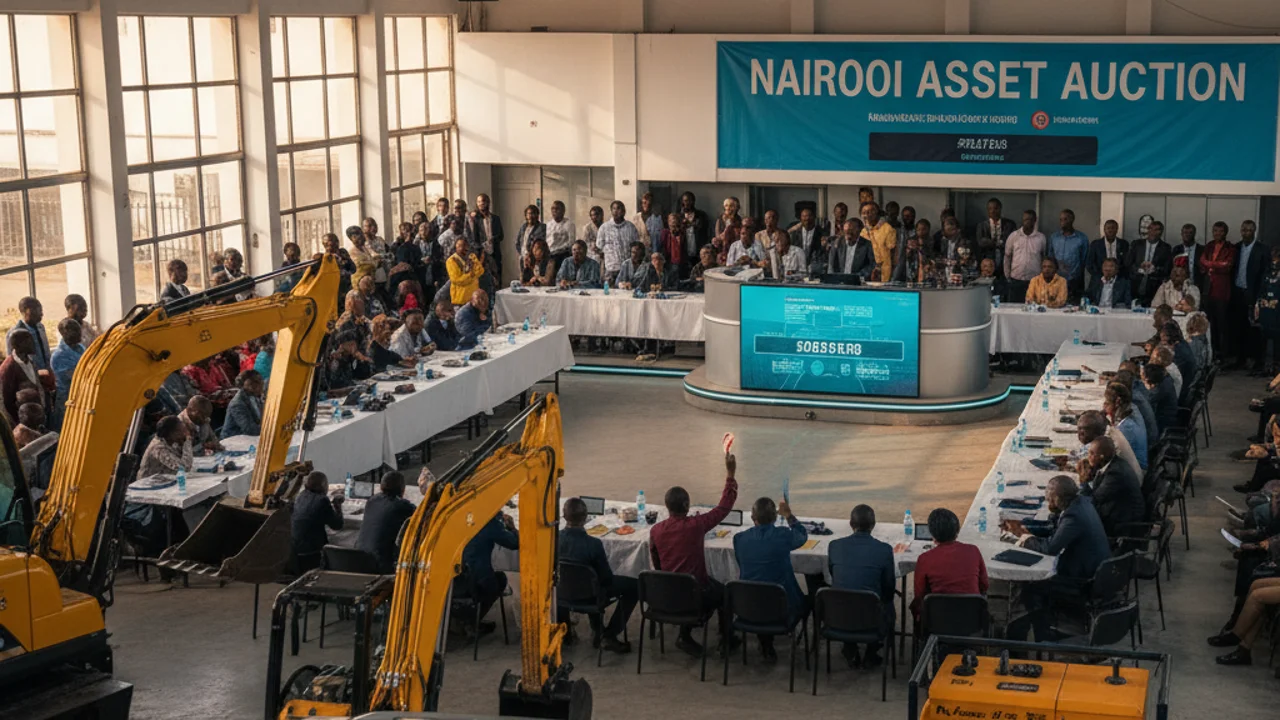
7. The Public Auction: The goods are sold to the highest bidder. The proceeds are then used to settle the debt, auctioneer's fees, and other costs. Any surplus is returned to the debtor.
Debt Recovery & Auctioneering Coverage in Kenya
Swipe Recoveries Experts Ltd provides commercial recovery, skip tracing, and auctioneering services across Kenya and all 47 counties in Kenya.
Costs Involved in a Debt Recovery Auction in KES

As a creditor initiating a debt recovery auction, you will incur initial costs, which are legally recoverable from the proceeds of the auction sale. It's important to budget for these upfront expenses in Kenyan Shillings (KES).
Auctioneer's Fees: These are the primary cost and are legislated under the Fourth Schedule of the Auctioneers Rules. They include fees for attachment, and a commission calculated as a percentage of the amount recovered. For example, the commission is typically 10% on the first KES 100,000, 5% on the next KES 900,000, and so on.
Ancillary Costs: You must also cover operational expenses. These include storage fees for the seized assets (e.g., KES 1,500 - KES 5,000 per day for a vehicle in a secure yard), towing charges, advertisement costs in newspapers (approx. KES 5,000 - KES 20,000), and potentially fees for requesting police assistance. While these are added to the total amount to be recovered from the debtor, the creditor usually pays for them first. Swipe Recoveries provides a clear schedule of fees and anticipated costs at the outset.