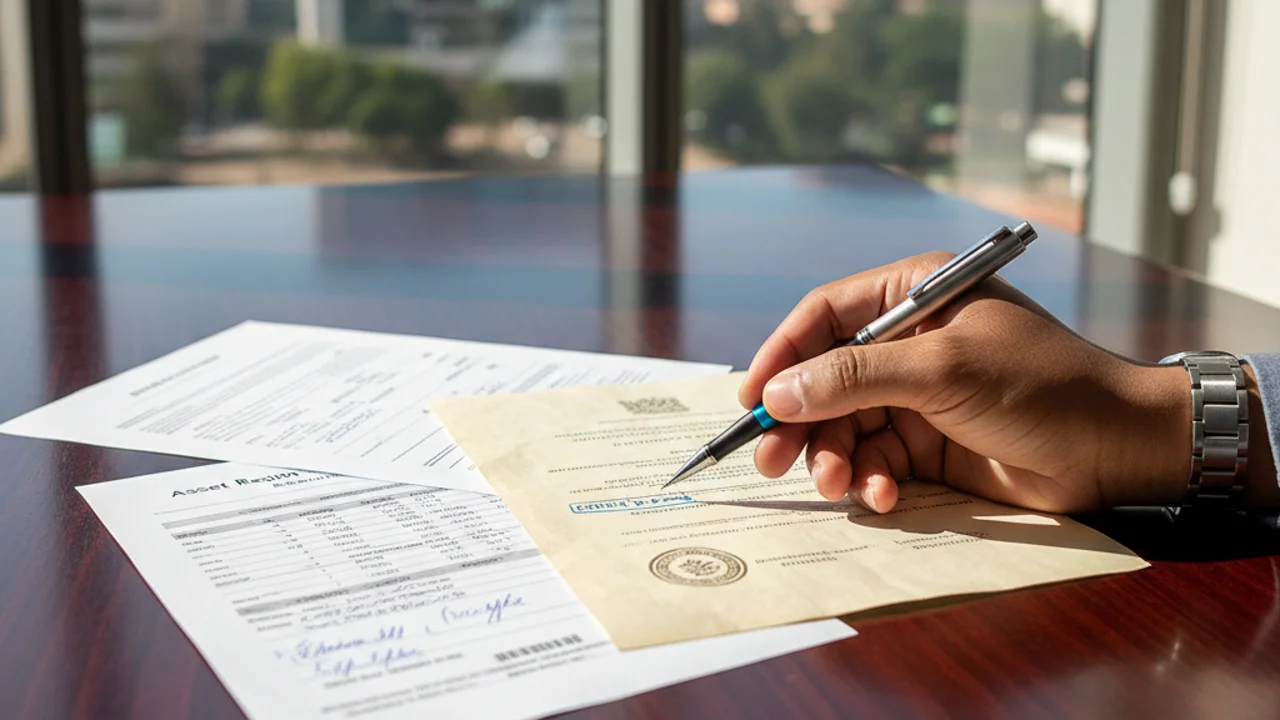
Maximizing Value Through Professional Property Disposal
Effective asset disposal Nakuru property services are critical for lenders, liquidators, and creditors seeking to recover value from real estate assets. The process is not merely about selling a property; it's a legally intensive procedure that demands strict adherence to Kenyan law to be valid. A misstep can lead to costly legal challenges and nullification of the sale. Swipe Recoveries Experts Ltd, as licensed auctioneers, provides a comprehensive asset disposal service that manages every stage of the process, from valuation and legal notifications to conducting a successful public auction. We ensure full compliance and strategic marketing to attract competitive bids, maximizing your financial recovery from properties within Nakuru and the wider Rift Valley region.
The Auctioneers Act: Legal Compliance in Property Auctions
The primary legal framework governing asset disposal through public auction in Kenya is the Auctioneers Act (Cap 526) and the accompanying Auctioneers Rules, 1997. This legislation is strictly enforced by the Auctioneers Licensing Board and sets out a clear, non-negotiable procedure that must be followed. Failure to comply with any step can render the entire auction invalid. A cornerstone of this process is the issuance of proper legal notices. This includes a 45-day redemption notice sent to the debtor via registered post, followed by a proclamation of attachment, which must be served personally.
Furthermore, the Act mandates a specific timeline for advertising the public auction. The sale must be advertised in a newspaper of wide circulation (such as The Daily Nation or The Standard) at least 14 days prior to the auction date. The advertisement must contain specific details, including the property's description, the conditions of sale, and the date, time, and place of the auction. Our role at Swipe Recoveries is to meticulously manage this entire legal process, ensuring every notice is correctly drafted, served, and documented, thereby protecting our clients from potential litigation and ensuring the legitimacy of the asset disposal.

Step-by-Step Guide to Property Disposal in Nakuru
Our structured approach to property asset disposal in Nakuru ensures a transparent, efficient, and legally sound process from start to finish.
Step 1: Instruction & Valuation. Upon receiving your instruction, we first coordinate a professional valuation of the subject property by a registered valuer. This valuation establishes the 'forced sale value' and the 'reserve price'—the minimum price the property can be sold for at auction, as required by law.
Step 2: Issuance of Statutory Notices. We immediately proceed with drafting and serving all requisite legal notices in compliance with the Auctioneers Act and any other relevant legislation (e.g., the Land Act for chargee's rights). This includes the redemption notice and proclamation of attachment.
Step 3: Advertisement & Marketing. Once the notice period expires, we place the mandatory newspaper advertisements. In addition, we execute a targeted marketing campaign to reach potential buyers and investors specifically interested in Nakuru property, from commercial plots in the CBD to residential homes in estates like Lanet or Milimani.
Step 4: Conducting the Public Auction. The auction is held at a designated public place on the specified date. Our licensed auctioneer conducts the proceedings professionally, encouraging competitive bidding to achieve the best possible price above the reserve.
Step 5: Post-Auction Formalities. Upon a successful sale, the highest bidder pays a deposit (typically 25%) and signs the memorandum of sale. We then work with all parties to ensure the remaining balance is paid within the stipulated period (usually 90 days) and facilitate the transfer process.
Debt Recovery & Auctioneering Coverage in Nakuru, Kenya
Swipe Recoveries Experts Ltd provides commercial recovery, skip tracing, and auctioneering services across Nakuru, Kenya and all 47 counties in Kenya.
Understanding Auction Fees and Disposal Costs in KES

The costs associated with property asset disposal in Nakuru are regulated by the Auctioneers Rules to ensure fairness and transparency. As your appointed auctioneers, Swipe Recoveries adheres strictly to this official fee scale.
The primary cost is the auctioneer's commission, which is calculated as a percentage of the sale price. As per the schedule in the Act, this is typically 10% on the first KES 100,000, 5% on the next KES 900,000, and scales down for higher amounts. For a property selling at KES 5,000,000, the commission would be clearly calculated based on these official tiers.
Other direct costs, known as disbursements, are billed to the client. These include:
Advertising Costs: The cost of placing ads in national newspapers can range from KES 40,000 to KES 100,000 depending on the size and publication.
Valuation Fees: These are paid to the professional valuer and depend on the property's value.
Security and Storage: If required to secure the property pre-auction, these costs will be itemized, often ranging from KES 10,000 to KES 30,000.
We provide a full, itemized statement of account post-auction, ensuring complete transparency on all fees and costs incurred.