Understanding Repossession & Asset Disposal in Kenya
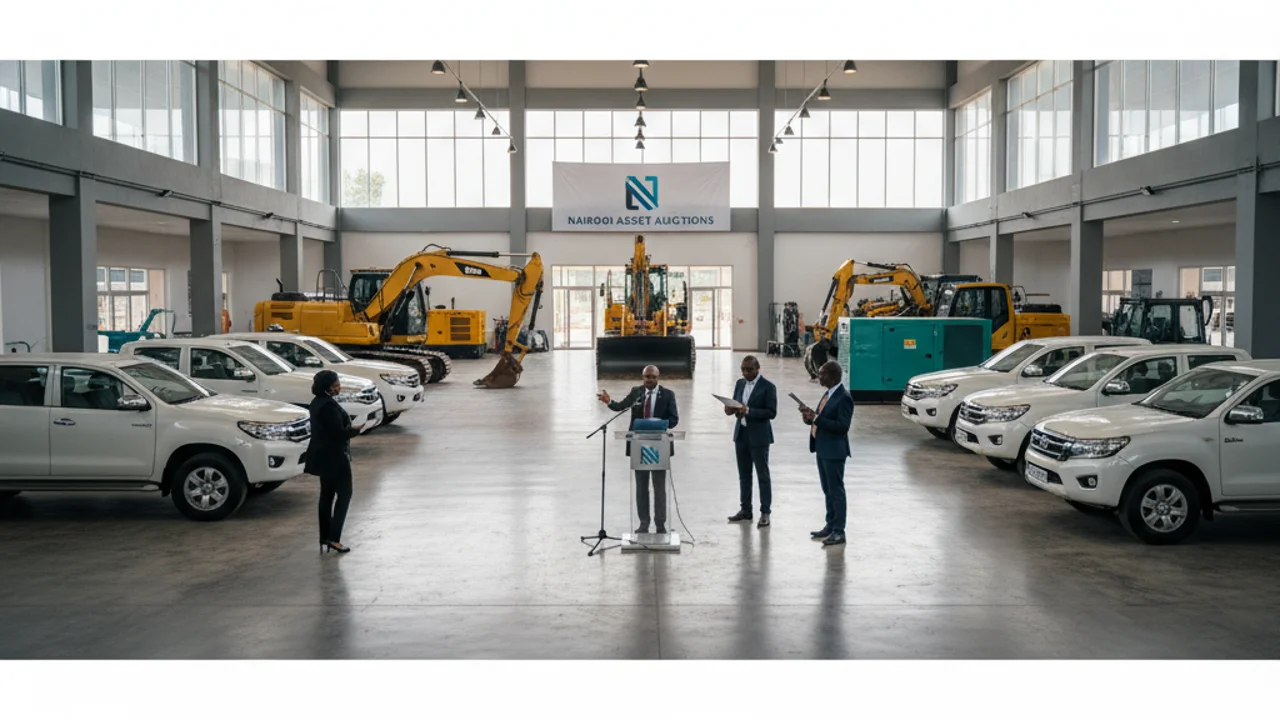
To sell repossessed assets Kenya requires navigating a precise legal framework to ensure compliance and maximize recovery value. Repossession is a legal process initiated by a lender or creditor to recover collateral when a borrower defaults on a loan or contractual obligation. This often involves tangible assets such as vehicles, machinery, or even real estate. The subsequent sale of these assets, typically through a public auction, aims to offset the outstanding debt. Swipe Recoveries Experts Ltd specializes in providing end-to-end solutions for the legal and efficient disposal of repossessed assets, ensuring creditors adhere to all statutory requirements under Kenyan law.
Legal Frameworks Governing the Sale of Repossessed Assets
The process to sell repossessed assets in Kenya is strictly governed by a suite of legislation designed to protect both creditors and debtors. Key among these is the Auctioneers Act (Cap 526), which outlines the licensing, conduct, and duties of licensed auctioneers who are indispensable for such sales. Additionally, the Movable Property Security Rights Act, 2017, provides a modern framework for secured transactions involving movable assets, impacting how security interests are created, perfected, and enforced through repossession and sale. For real estate, the Land Act, 2012, and the Land Registration Act, 2012, dictate the procedures for charges, mortgages, and their realization through forced sales. Creditors, particularly financial institutions, must also adhere to regulations set by the Central Bank of Kenya and provisions within the Banking Act concerning non-performing loans and asset recovery. These laws mandate proper notice periods, valuation procedures, and transparent auction processes to avoid legal challenges from debtors. Failure to comply can lead to invalidation of the sale, significant penalties, and reputational damage. Swipe Recoveries ensures every step aligns with these stringent legal requirements.
Procedure for Selling Repossessed Assets via Public Auction
The standard procedure for how to effectively sell repossessed assets Kenya involves several critical stages, each requiring meticulous attention to detail and legal adherence. Firstly, a formal notice of intention to sell, typically a 40-day statutory notice for land or a shorter notice for chattels, must be served to the defaulting party, providing them an opportunity to regularize their account. Upon expiry of this notice, a professional, independent valuation of the asset is conducted by a registered valuer, establishing the reserve price for the auction. Next, the sale must be adequately advertised in a widely circulated newspaper or other public channels, specifying the asset details, location of the auction (e.g., within Nairobi or the specific county where the asset is located), and terms of sale. The public auction is then conducted by a licensed auctioneer, ensuring transparency and competitive bidding. Post-auction, the successful bidder completes payment, and the asset is formally transferred. For vehicles, this involves the National Transport and Safety Authority (NTSA) transfer process. All proceeds are used to offset the debt, with any surplus returned to the debtor and any deficit remaining their liability. Swipe Recoveries Experts Ltd streamlines this complex process, handling all documentation, legal notices, and the auction itself from our base in Nairobi to ensure a smooth, compliant, and profitable asset disposal.
Debt Recovery & Auctioneering Coverage in Kenya
Swipe Recoveries Experts Ltd provides commercial recovery, skip tracing, and auctioneering services across Kenya and all 47 counties in Kenya.
Cost & Fee Expectations When Selling Repossessed Assets

When planning to sell repossessed assets Kenya, understanding the associated costs is crucial for financial planning. The fees charged by licensed auctioneers are regulated by the Auctioneers Act (Cap 526), which specifies a sliding scale based on the value of the asset. For example, auctioneer's fees typically range from 2.5% to 5% of the gross sale proceeds for movable property and similar percentages for immovable property, often with a minimum charge. Beyond the auctioneer’s commission, other costs include advertising expenses (varying based on publication reach, typically KES 10,000 to KES 50,000 for local newspapers), valuation fees (e.g., KES 15,000 to KES 100,000+ depending on asset complexity and value), storage charges for the repossessed asset if applicable (e.g., KES 500-2,000 per day for vehicles), and potentially legal fees for advisory or court processes if there are disputes. These costs are usually recovered from the sale proceeds. Swipe Recoveries Experts Ltd provides a transparent breakdown of all anticipated expenses upfront, ensuring no hidden charges as we manage the entire auctioneering process efficiently to achieve the best possible return on your repossessed assets.