Understanding Proclamation and Attachment of Assets
The legal seizure of goods in Kenya, correctly termed 'attachment of property', is a powerful legal remedy for enforcing court judgments and recovering secured debts. It is a strictly regulated process that cannot be carried out arbitrarily. Swipe Recoveries Experts Ltd, through its network of licensed and gazetted auctioneers, facilitates this process in full compliance with Kenyan law. Whether you are a landlord seeking to recover rent arrears via distress, or a creditor with a court decree, understanding the correct procedure—from proclamation to attachment and eventual sale by public auction—is essential to ensure the action is lawful and effective.
The Governing Law: The Auctioneers Act & Civil Procedure Act
The primary legislation governing the seizure of goods is The Auctioneers Act (No. 5 of 1996) and its accompanying Auctioneers Rules. This Act establishes the Auctioneers Licensing Board and sets out the precise, step-by-step procedure that a licensed auctioneer must follow. Any deviation from these rules can render the entire process illegal and expose the creditor to a lawsuit for wrongful attachment. The Act clearly defines an auctioneer's powers, the required legal notices, and the timeline for each step.
For seizures resulting from a court case, the process is also guided by The Civil Procedure Act (Cap. 21) and its Rules. A court must first issue a decree (judgment) in favour of the creditor, who then applies for a 'Warrant of Attachment and Sale'. This warrant is what gives the auctioneer the legal authority to act. For landlords, the relevant law is The Distress for Rent Act (Cap. 293), which allows for the seizure of a tenant's goods to recover rent arrears, but still requires the process to be carried out by a licensed auctioneer following the procedures in the Auctioneers Act.
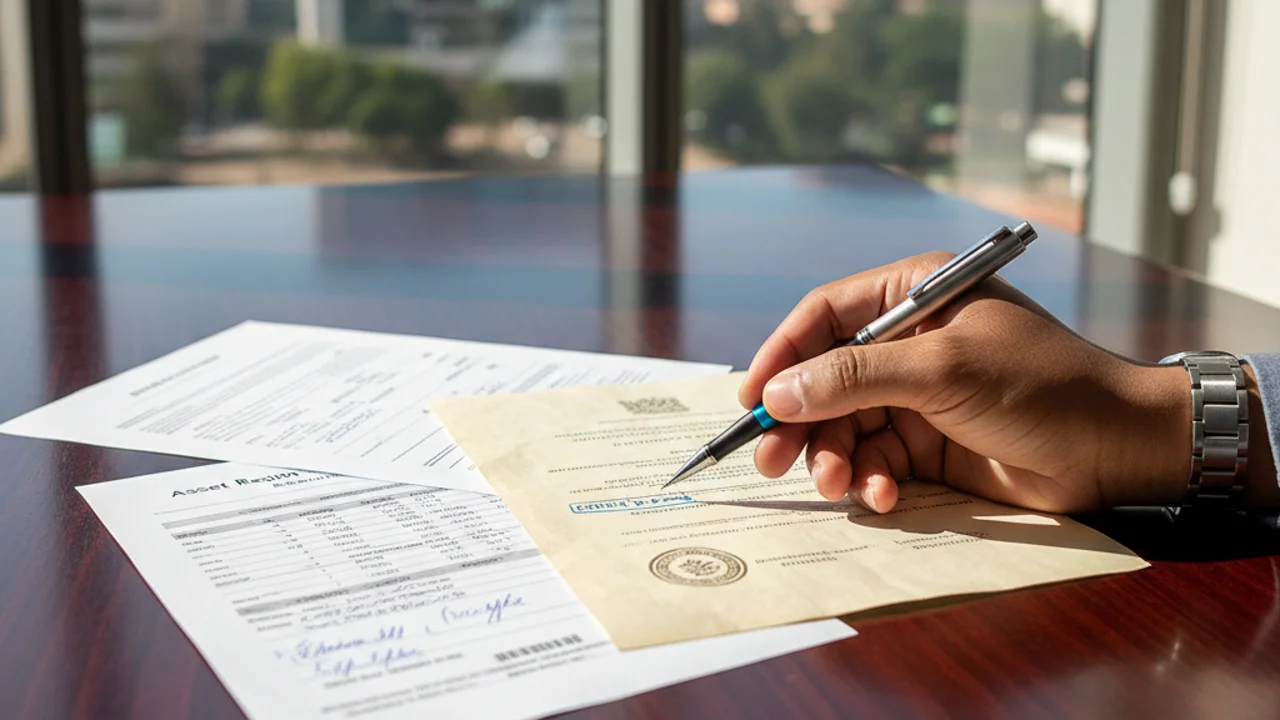
The Step-by-Step Procedure for Lawful Seizure of Goods
A lawful seizure of goods follows a strict, non-negotiable sequence. Step 1: Issuance of Instructions & Warrants. The creditor (or their advocate) formally instructs a licensed auctioneer and provides them with the necessary legal instrument—either a court's Warrant of Attachment or a letter of instruction for distress for rent.
Step 2: Proclamation. The auctioneer visits the debtor's premises and prepares a 'Proclamation Notice'. This notice lists the goods that have been notionally seized to cover the debt and costs. The debtor is then given a specific period, typically seven (7) to fourteen (14) days as stipulated in the notice, to pay the debt. During this time, the goods are not physically removed.
Step 3: Attachment (Physical Seizure). If the debtor fails to pay within the proclamation period, the auctioneer can return to physically attach and remove the proclaimed goods. The auctioneer must prepare an accurate inventory of the removed items. It is illegal to remove goods specifically exempted by the Auctioneers Act, such as bedding, clothing, and tools of trade.
Step 4: Sale by Public Auction. After attachment, the auctioneer must advertise the intended sale in a newspaper with nationwide circulation. The goods can only be sold by public auction after a minimum of seven (7) days from the date of the newspaper advertisement. The proceeds are then used to settle the debt, with any surplus returned to the debtor.
Debt Recovery & Auctioneering Coverage in Kenya
Swipe Recoveries Experts Ltd provides commercial recovery, skip tracing, and auctioneering services across Kenya and all 47 counties in Kenya.
Costs and Fees Associated with Seizure of Goods

The costs associated with the seizure of goods in Kenya are regulated by the Auctioneers Rules and are payable by the debtor. The creditor typically pays a deposit or 'instructions fee' to the auctioneer to initiate the process, which is then recovered from the debtor. These fees are calculated based on the value of the debt.
For example, the auctioneer's charges include fees for proclamation, attachment, transport, storage, and a commission on the sale. The commission on movables is typically 10% on the first KES 100,000, 5% on the next KES 900,000, and so on, as per the gazetted scale. For a debt of KES 500,000, the auctioneer's commission on a successful sale would be around KES 30,000 (10% of 100k + 5% of 400k), plus other costs like transport and storage. Swipe Recoveries ensures all charges are transparent and strictly adhere to the legal fee scale.