Understanding and Participating in Public Property Auctions
Information on government house auctions is highly sought after by investors and aspiring homeowners looking for valuable property deals in Kenya. These auctions are typically conducted when a public entity, such as a government ministry, parastatal, or county government, disposes of its assets in accordance with the law. This can include residential houses, commercial buildings, and land. The process is formal and legally regulated to ensure transparency and fairness. Understanding the procedure, from the initial public notice to the fall of the hammer, is crucial for any potential bidder. Swipe Recoveries Experts Ltd, operating from our central office on Mama Ngina Street, provides professional auctioneering services and expert guidance for those looking to navigate the complexities of these public auctions.
The Legal Framework: The Public Procurement and Asset Disposal Act
The primary legal instrument governing government house auctions in Kenya is The Public Procurement and Asset Disposal Act, 2015 (PPADA). This Act outlines the specific procedures that all public entities must follow when disposing of unserviceable, obsolete, or surplus assets, which includes real estate. The goal of the PPADA is to ensure transparency, accountability, and value for money for the public. A key requirement under this act is the establishment of a disposal committee within the public entity. This committee is responsible for verifying the assets for disposal, determining the appropriate disposal method (public auction is a common choice), and setting a realistic reserve price based on a current market valuation.
Another critical law is The Auctioneers Act (Cap 526) and its accompanying Auctioneers Rules. When a government body opts for a public auction, it must engage a licensed auctioneer. This Act governs the conduct of the auctioneer, the advertising requirements (including publication in the Kenya Gazette and newspapers of wide circulation), the conditions of sale, and the handling of deposits and sale proceeds. Compliance with both the PPADA and the Auctioneers Act is mandatory, and any deviation can render an auction null and void. Our team at Swipe Recoveries includes licensed auctioneers who are well-versed in these statutory requirements.

The Auction Process: From Advertisement to Winning Bid
The procedure for a government house auction follows a clear, regulated path. First, the public entity, through its chosen licensed auctioneer, must publish a Public Auction Notice. This notice will appear in at least two daily newspapers with nationwide circulation and often in the Kenya Gazette. It will detail the properties for sale, their locations, viewing dates, and the date, time, and venue of the auction. The notice will also specify the required bid deposit, which is a refundable amount prospective bidders must pay to be allowed to participate.
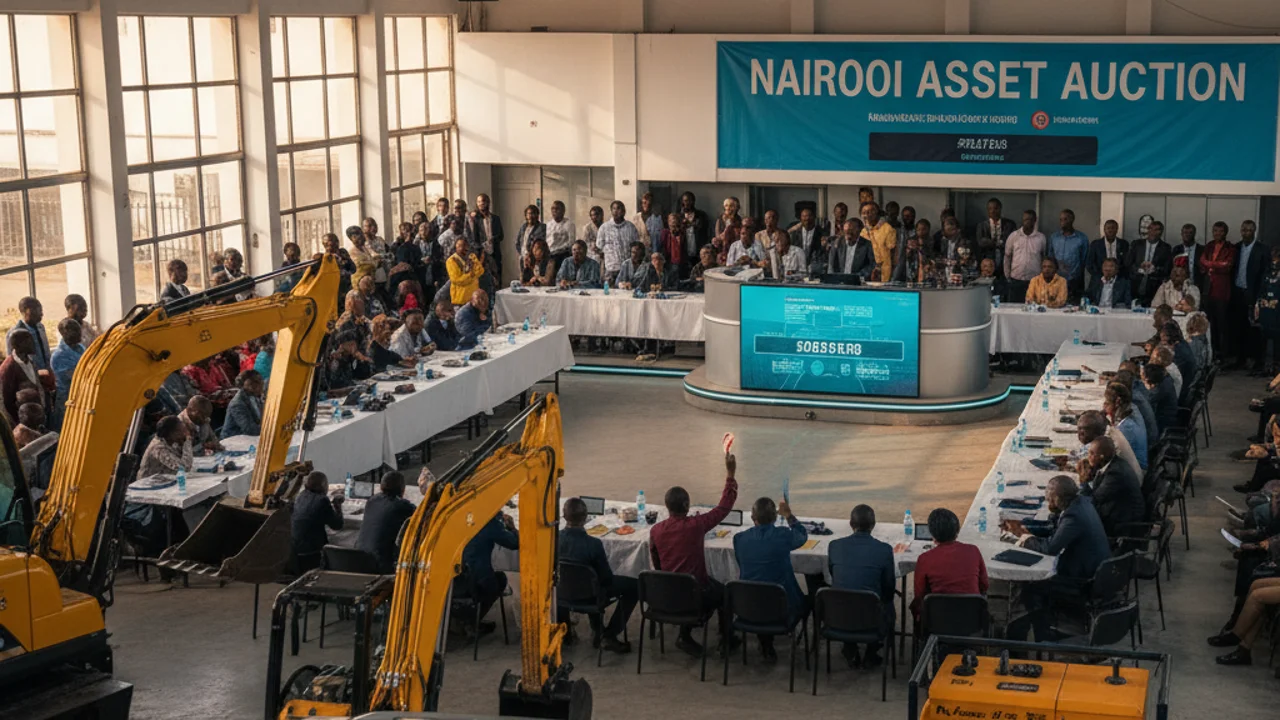
On the auction day, registered bidders gather at the specified location. The auctioneer reads out the Conditions of Sale, which outline the terms of the auction, including the payment schedule for the successful bidder (e.g., 25% of the purchase price at the fall of the hammer, and the 75% balance within a specified period, often 30-90 days). The auctioneer then introduces the property and calls for an opening bid, which must be at or above the reserve price. Bidding proceeds in increments until no more bids are forthcoming. The highest bidder at the fall of the hammer is declared the purchaser. They must immediately pay the required percentage of the bid price. Failure to complete the payment as per the conditions of sale results in the forfeiture of the deposit.
Costs, Fees, and Practical Tips for Bidders

Bidders must be aware of several costs. The main cost is, of course, the final purchase price ('hammer price'). In addition to this, the successful bidder is often responsible for the auctioneer's fees, which are regulated by the Auctioneers Rules and are typically a percentage of the sale price. It's also crucial to budget for stamp duty, legal fees for conveyance, and any outstanding land rates or rents that may be attached to the property. These details are usually outlined in the conditions of sale.
A key cost is the refundable bidding deposit, which can range from KES 100,000 for smaller properties to over KES 1,000,000 for high-value government houses in prime areas like Nairobi. This deposit is returned promptly if you do not win the bid. Practical Tip: Always conduct due diligence before the auction. Visit the property during the specified viewing times, and consider conducting a title search at the relevant Land Registry to verify ownership and check for any encumbrances.