Enforcing Court Judgments Through Asset Auctions
A debtor asset auction is a powerful legal remedy for a creditor (decree-holder) to recover funds after successfully obtaining a court judgment. It is the final, enforceable step that converts a court order on paper into tangible cash. Swipe Recoveries Experts Ltd are licensed auctioneers who specialize in the execution of court warrants. We manage the entire process—from proclamation and attachment of the debtor's (judgment-debtor's) assets to the transparent public auction. We ensure that every action is meticulously aligned with Kenya's legal framework, empowering you to enforce your rights and recover the debt you are owed swiftly and effectively.
Legal Framework: The Civil Procedure Act & Auctioneers Act
The authority to conduct a debtor asset auction stems directly from a court order and is strictly governed by two principal statutes: the Civil Procedure Act (Cap 21) and the Auctioneers Act (Cap 526). A creditor cannot simply seize a debtor's assets; they must follow the due process of the law. The process begins after a court has heard a case and issued a 'decree' (judgment) in favour of the creditor.
The creditor's advocate then applies to the court for 'execution' of this decree. The court, upon being satisfied, issues a Warrant of Attachment and Sale. This warrant is the legal instrument that commands a licensed auctioneer to seize and sell the debtor's property to satisfy the amount stated in the decree. The Civil Procedure Rules provide detailed regulations on what can and cannot be attached. For instance, the law protects essential items necessary for basic survival, such as cooking vessels, bedding, and tools of trade up to a certain value, from being attached. This protects the debtor from complete destitution.
Once the warrant is issued, the Auctioneers Act and its accompanying rules dictate the precise methodology the auctioneer must follow. This includes the process of proclaiming the goods, the timelines for payment, the manner of attachment, storage of goods, and the requirements for advertising the public auction. Adherence to both the Civil Procedure Act and the Auctioneers Act is non-negotiable; any deviation can lead to the auction being declared illegal and expose the creditor to a lawsuit for wrongful attachment.

Executing a Debtor Asset Auction: The Official Procedure
Once a creditor has a Warrant of Attachment and Sale in hand, Swipe Recoveries Experts Ltd executes the order through a professional and legally defined procedure.
Step 1: Instruction and Warrant Lodging. The creditor or their advocate provides us with the original court warrant and a letter of instruction. We lodge a copy of the warrant with the local police station (Officer Commanding Station - OCS) in the jurisdiction where the assets are located to notify them of the impending legal action.
Step 2: Proclamation of Attachment. Our licensed auctioneer proceeds to the debtor's premises to identify and proclaim attachable assets. A 'Proclamation Notice' is served on the debtor, listing the items being attached. This notice gives the debtor a legally specified period, typically seven (7) days, to pay the decretal amount plus costs to avoid removal of the goods.
Step 3: Attachment and Removal of Assets. If the debtor fails to pay within the stipulated time, our team returns to the premises to physically seize the proclaimed assets. We often do this with police assistance to ensure the process is peaceful and orderly. The seized goods are then transported to a secure auctioneer's yard for safekeeping.
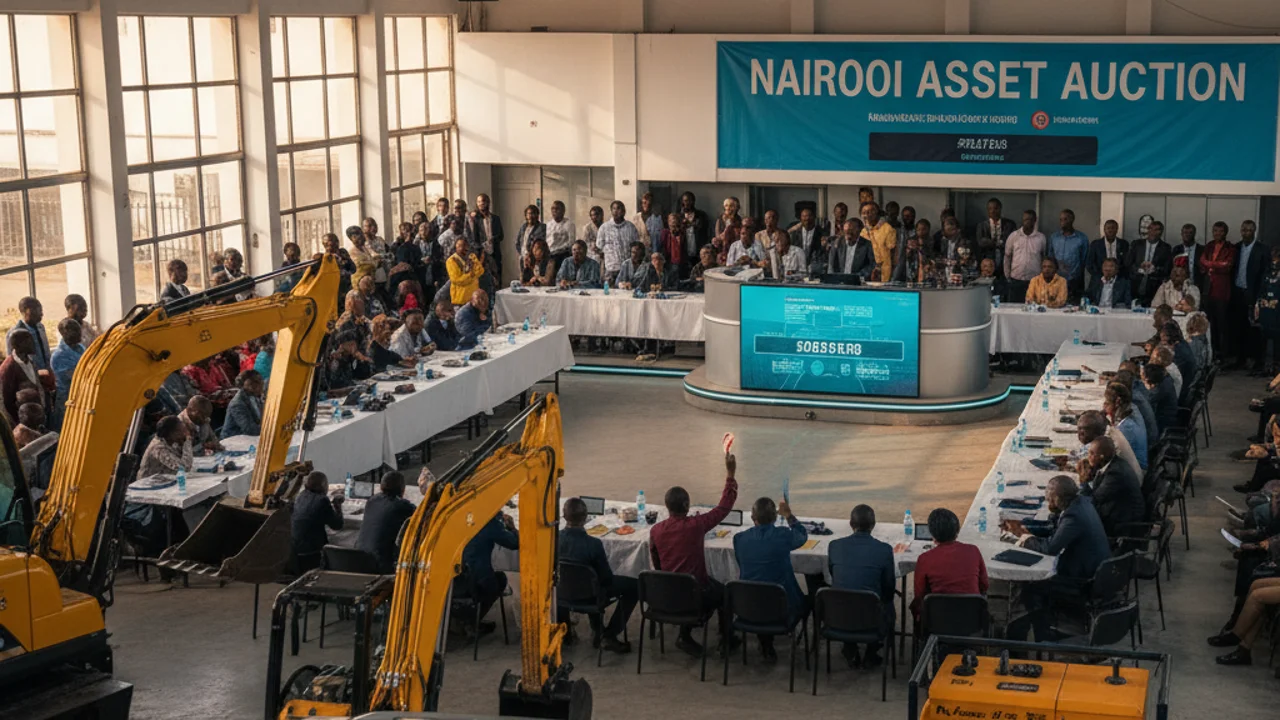
Step 4: Advertisement and Public Auction. A public auction must be advertised in a newspaper with nationwide circulation. The advertisement for movable goods (like vehicles or office equipment) must run for at least seven to fourteen days. The notice specifies the date, time, and location of the auction. The auction is then held publicly, and the assets are sold to the highest bidder. The proceeds are used to settle the debt, with any surplus returned to the debtor.
Costs & Fees Associated with a Debtor Asset Auction (KES)

The costs of executing a debtor asset auction are initially borne by the creditor (decree-holder) but are legally recoverable from the debtor. These costs are added to the total amount to be recovered from the sale proceeds. The fee structure is regulated by the Auctioneers Rules to ensure fairness.
Typical costs you can expect to incur include:
Court Fees: Nominal fees paid to the judiciary for the issuance of the Warrant of Attachment, usually in the range of KES 1,500 - KES 5,000.
Auctioneer's Fees: This includes proclamation fees, attachment fees, and a commission on the sale proceeds. The commission is set on a sliding scale by law (e.g., up to 10% on the first KES 100,000, 5% on the next KES 900,000, etc.).
Operational Costs (Disbursements): These are the direct expenses required to facilitate the auction. They include newspaper advertisement costs (KES 10,000 - KES 30,000+), transportation for the seized goods, security costs for the attachment process, and storage fees for the period the goods are held before the auction.
At Swipe Recoveries, we provide a clear breakdown of estimated costs before we begin, ensuring you are fully aware of the financial implications. Our primary goal is to ensure that these recoverable costs, along with the principal debt, are successfully realized from the auction.