Understanding Bank Auctions in Kenya: A Comprehensive Guide
Bank auctions in Kenya represent a significant segment of the asset recovery and sales market, offering unique opportunities for investors and individuals to acquire properties and movable assets at competitive prices. These auctions typically stem from loan defaults, where financial institutions exercise their right to sell collateral to recover outstanding debts. Swipe Recoveries Experts Ltd, a leading expert in debt recovery and auctioneering, provides invaluable insights and professional services for navigating the complexities of bank auctions in Kenya. Our expertise ensures both financial institutions and prospective buyers engage in transparent and legally compliant transactions.
Legal Framework & Regulatory Compliance for Bank Auctions in Kenya
The execution of bank auctions in Kenya is meticulously governed by several key pieces of legislation, ensuring legal sanctity and protecting stakeholder interests. The overarching law for financial institutions is the Banking Act, while the process of recovering secured loans through collateral sales is primarily guided by the Land Act 2012 and the Land Registration Act 2012 for immovable properties (land and buildings). These Acts specify the mandatory statutory notices (e.g., a 90-day notice for land before exercising a chargee's power of sale) that banks must issue to defaulting borrowers before initiating the auction process.
For movable assets, the Chattels Transfer Act and provisions within the Auctioneers Act Cap 526 are paramount. All licensed auctioneers, including Swipe Recoveries Experts Ltd, must adhere to the regulations set forth by the Auctioneers Licensing Board. Furthermore, the Central Bank of Kenya (CBK) provides supervisory guidelines to financial institutions regarding non-performing loans (NPLs) and asset recovery. Compliance with these frameworks, including the proper issuance of proclamations of sale and publishing advertisements in a gazette notice and national newspapers, is crucial for the legality and validity of any bank auction in Kenya.
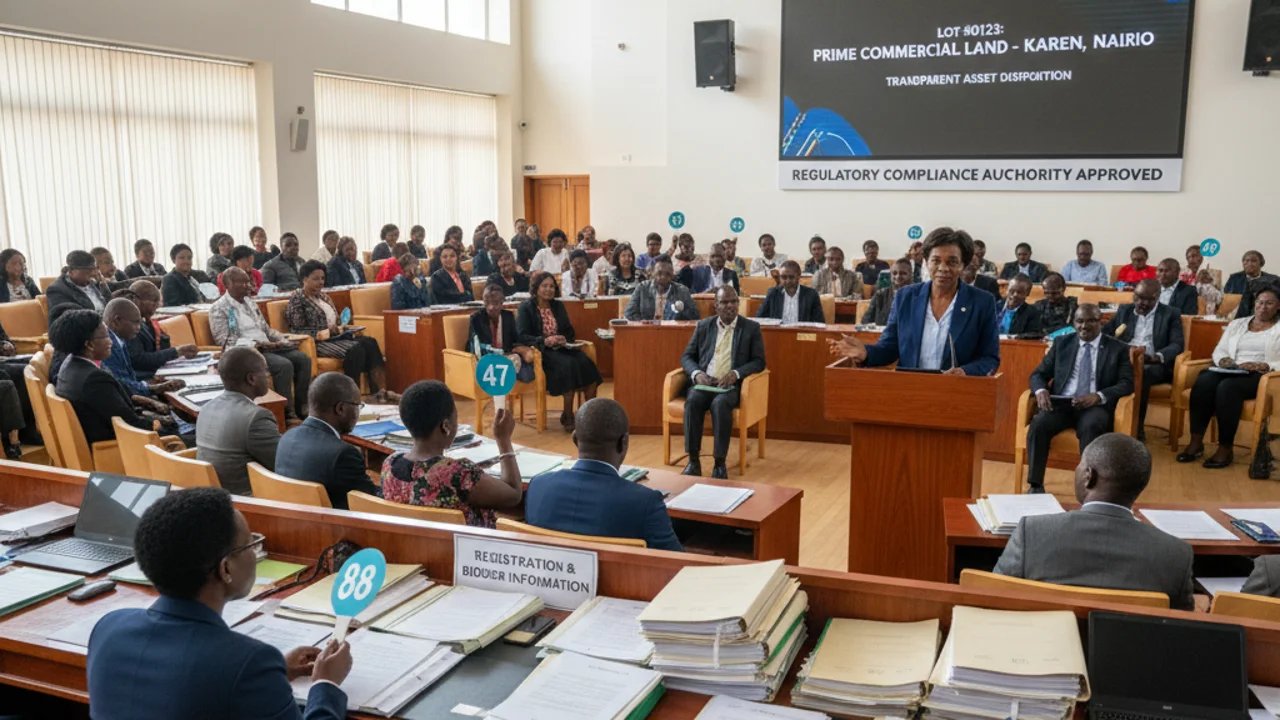
The Bank Auction Process in Kenya: Steps and Requirements
Participating in or conducting bank auctions in Kenya involves a structured process, beginning long before the auction day. Once a borrower defaults on a secured loan, the bank issues a series of demand letters and mandatory statutory notices. If the default persists, the bank instructs a licensed auctioneer to commence the recovery process. This involves obtaining a professional valuation report for the asset from a registered valuer, establishing a reserve price based on market value.
The auctioneer then issues a proclamation of sale and advertises the auction in prominent local newspapers and often in the Kenya Gazette, providing details of the asset, location, and auction date. Public viewing sessions are typically organized for prospective buyers. On the auction day, the auctioneer conducts the sale, accepting bids above the reserve price. Successful bidders are required to pay a deposit (e.g., 25% of the purchase price) immediately, with the balance due within a period specified in the auction terms, usually 7 to 14 days. Buyers must present a valid National ID or passport and KRA PIN for registration. Engaging professional services from Swipe Recoveries Experts Ltd ensures a smooth and compliant auction experience, whether you are a financial institution seeking recovery or an investor looking for opportunities.
Debt Recovery & Auctioneering Coverage in Kenya
Swipe Recoveries Experts Ltd provides commercial recovery, skip tracing, and auctioneering services across Kenya and all 47 counties in Kenya.
Understanding Costs and Fees for Bank Auctions in Kenya

The cost structure for bank auctions in Kenya is regulated and typically borne initially by the financial institution, with the aim of recovering these costs from the sale proceeds. The primary fee is the auctioneer's commission, which is stipulated by the Auctioneers Act Cap 526. For immovable property, this might be 2.5% on the first KES 100,000 and 1.25% on the balance, up to a certain maximum. For movable assets, the rates are generally higher, such as 10% on the first KES 40,000 and decreasing percentages thereafter.
Additional significant costs include the professional valuation report fees, which can range from KES 10,000 to over KES 100,000 depending on the complexity and value of the asset. Advertisement costs, covering newspaper insertions and Kenya Gazette notices, can accumulate to KES 5,000 – KES 50,000 or more. Legal fees for preparing statutory notices, court orders (if necessary), and transfer documents are also part of the expense. Other potential costs involve security, storage, and logistics for managing the repossessed assets. Swipe Recoveries Experts Ltd provides a transparent breakdown of these costs, ensuring that banks have a clear understanding of the recovery process expenses, optimizing their net recovery.