Finding Value in Vehicle Auctions
Buying an auction vehicle in Kenya offers a fantastic opportunity to acquire a car, truck, or motorcycle at a price often well below market value. These vehicles typically come from bank repossessions, ex-government fleets, or company liquidations, providing a wide range of options for discerning buyers. However, the process can seem intimidating to the uninitiated. It's crucial to understand the legal procedures, bidding etiquette, and potential hidden costs to make a successful purchase. As licensed auctioneers, Swipe Recoveries Experts Ltd facilitates transparent and legally compliant vehicle auctions across the country. This guide provides the authoritative information you need to navigate the auction landscape confidently, from identifying legitimate auctions to driving away in your newly acquired vehicle.
The Legal Framework for Vehicle Auctions in Kenya
All public auctions in Kenya, including those for vehicles, are strictly regulated by the Auctioneers Act (Cap 526) of the Laws of Kenya. This legislation is designed to protect both the seller (creditor) and the buyer by ensuring fairness, transparency, and a standardized process. A key requirement is that any auction must be conducted by an auctioneer who holds a valid, current license issued by the Auctioneers Licensing Board. This ensures accountability and adherence to professional standards.
The Act mandates that a public auction must be advertised in advance, usually in national newspapers like the Daily Nation or The Standard, and sometimes in the Kenya Gazette. The advertisement must specify the date, time, and location of the auction, as well as a list of the vehicles to be sold, including details like make, model, and registration number. For repossessed vehicles, the legal basis for the sale often stems from a chattel mortgage created under the Chattels Transfer Act, which gives the lender the right to seize and sell the asset upon default. Compliance with these legal provisions is non-negotiable for a valid auction and a clean title transfer.
How to Participate: A Step-by-Step Auction Guide
Participating in a vehicle auction is a straightforward process when you know the steps. Following this procedure will ensure you are well-prepared.
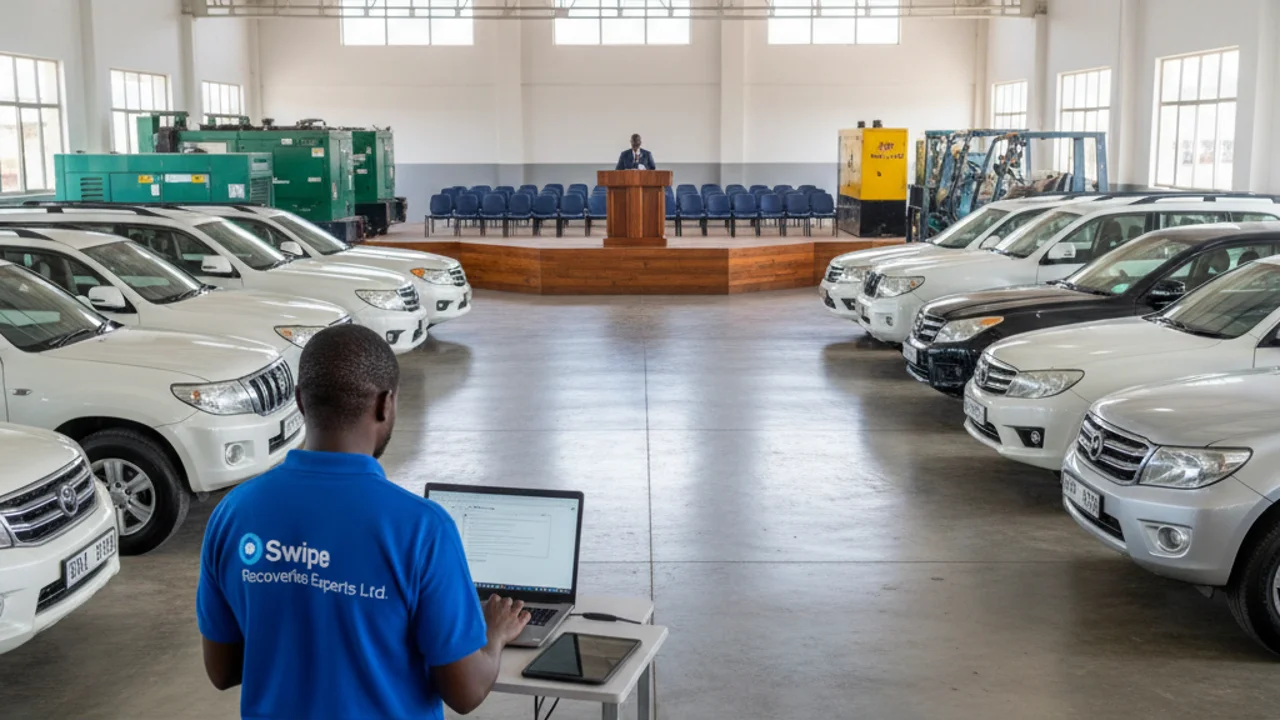
1. Find and View Vehicles: Keep an eye on newspaper classifieds and websites of reputable auctioneers like Swipe Recoveries for auction announcements. Crucially, attend the pre-auction viewing day. This is your only chance to physically inspect the vehicle's condition. It's wise to bring a trusted mechanic with you.
2. Register to Bid: On the auction day, you must register to participate. This involves providing your National ID or Passport and KRA PIN. You will be required to pay a refundable bidding deposit, often in the form of a banker's cheque. The amount varies but could be anywhere from KES 50,000 to KES 200,000 or more, depending on the value of the vehicles.
3. The Bidding Process: Once registered, you'll receive a bidding number. Listen carefully as the auctioneer announces the lot number and details of each vehicle. Bidding is done by raising your number. The vehicle is sold to the highest bidder once the hammer falls, provided the 'reserve price' (the minimum acceptable price) has been met.
4. Payment and Transfer: If you are the winning bidder, you'll typically be required to pay a percentage of the purchase price immediately (e.g., 25%), with the balance due within a short period (e.g., 24-48 hours). Once fully paid, you will be given the vehicle's original logbook and a signed transfer form to initiate the ownership transfer process on the NTSA TIMS portal.
Debt Recovery & Auctioneering Coverage in Kenya
Swipe Recoveries Experts Ltd provides commercial recovery, skip tracing, and auctioneering services across Kenya and all 47 counties in Kenya.
Understanding the Full Cost of an Auction Vehicle

The 'hammer price' is not the final cost. It's essential to budget for additional expenses to determine the true total cost of your auction vehicle in Kenya. The most significant additional cost is the auctioneer's commission, which is typically around 10% of the hammer price, plus VAT (16%) on that commission. You must also factor in potential storage fees if you do not collect the vehicle within the stipulated timeframe.
For example, if you win a vehicle with a hammer price of KES 800,000:
- Hammer Price: KES 800,000
- Auctioneer's Commission (10%): KES 80,000
- VAT on Commission (16% of 80k): KES 12,800
- Total before other fees: KES 892,800
Furthermore, you will be responsible for the National Transport and Safety Authority (NTSA) logbook transfer fees, which vary based on the vehicle's engine capacity. Finally, always set aside a contingency fund for any immediate repairs or servicing the vehicle may require post-purchase. Understanding these costs upfront ensures a smooth and financially sound purchase.