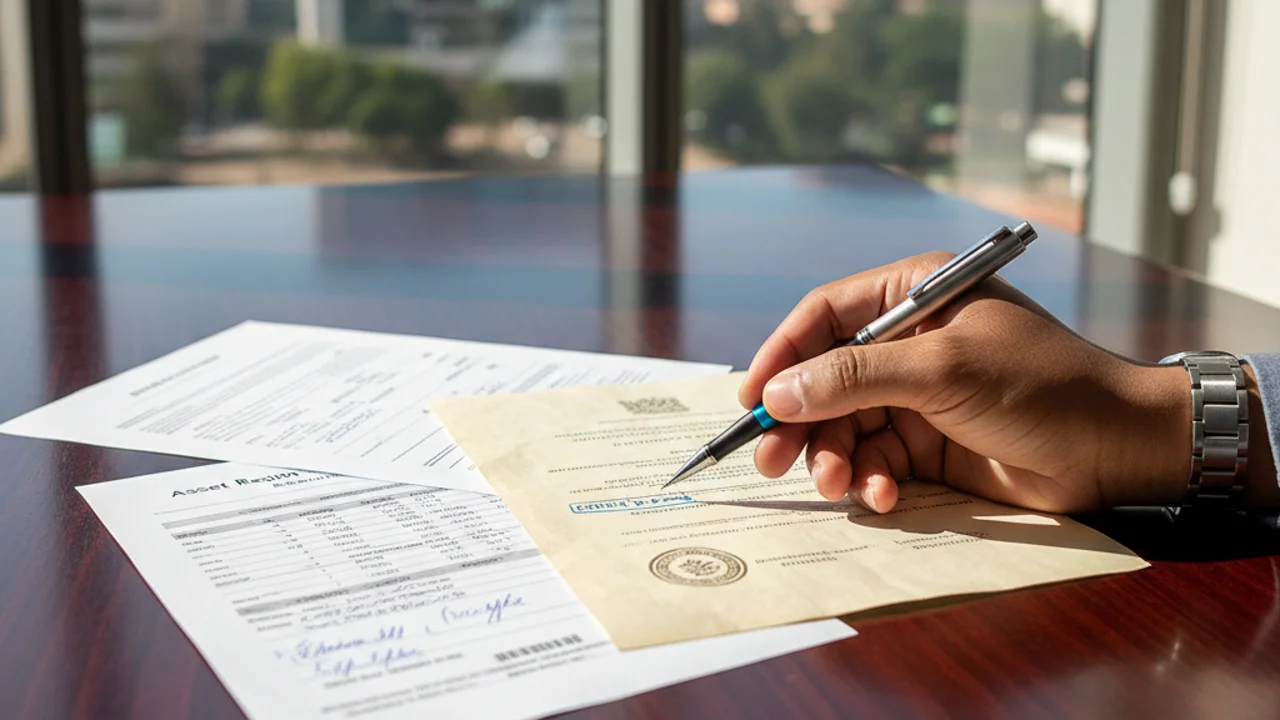
Understanding Debt Collateral & Auction Procedures in Kenya
When facing the challenge of recovering outstanding debts, understanding the legal and procedural framework to effectively auction debt collateral in Kenya is critical. This process involves the lawful sale of assets pledged as security to satisfy a debt, a complex area requiring expert navigation to ensure both legal compliance and optimal financial recovery. Swipe Recoveries Experts Ltd provides comprehensive, legally compliant, and highly efficient services for creditors seeking to realize their collateral through public auction. With a deep understanding of the relevant statutes, including the Auctioneers Act Cap 526 and the various property laws, and a steadfast commitment to maximizing recovery, our dedicated team, operating from our strategic location at International Life Hse, 8th Floor, Mama Ngina Street, Nairobi, offers unparalleled expertise. We meticulously guide clients through every intricate step, ensuring transparency, adherence to due process, and ultimately delivering the tangible results that matter to your bottom line, transforming complex challenges into successful resolutions.
Legal Frameworks Governing Collateral Auctions in Kenya
The process to auction debt collateral in Kenya is meticulously governed by a robust legal framework designed to protect both creditors and debtors, ensuring fairness and transparency. The primary legislation is the Auctioneers Act Cap 526, buttressed by the Auctioneers Rules, which dictate the licensing, conduct, and precise procedures for licensed auctioneers operating across Kenya. For movable property, such as vehicles or machinery, the Chattels Transfer Act is often relevant, outlining the legal aspects of charges over such assets. For immovable property, including land and buildings, the Land Act No. 6 of 2012 and the Land Registration Act No. 3 of 2012 comprehensively outline specific requirements for realizing charged property through public auction. These statutes mandate strict adherence to pre-auction procedures, including issuing specific demand notices, statutory notices (e.g., a 40-day notice under the Land Act), and redemption notices, all aimed at giving the debtor ample opportunity to settle the debt before the collateral is advertised for sale.
Creditors initiating the auction process must engage a duly licensed auctioneer, whose pivotal role involves obtaining independent valuation reports to establish a realistic reserve price and forced sale value for the collateral, advertising the sale widely in national newspapers, and conducting the auction ethically and in strict accordance with legal stipulations. The auctioneer operates under the strict supervision of the Auctioneers Board, a statutory body under the Ministry of Interior and National Administration, which ensures professional conduct, adherence to gazetted fees, and accountability. Furthermore, where debt collateral involves company assets, the Companies Act No. 17 of 2015 might also apply, especially concerning receivership or liquidation procedures that lead to asset disposal. Understanding these intertwined legal provisions, including directives from the National Treasury on government procurement via auction, is absolutely essential for a successful and legally challenge-proof auction, making expert guidance from firms like Swipe Recoveries Experts Ltd indispensable. We ensure every step, from meticulous valuation and proper gazettement to the actual sale on Mama Ngina Street, complies with Kenya’s dynamic legal landscape, diligently safeguarding your interests and maximizing recovery.

The Step-by-Step Procedure for Collateral Auction
The journey to auction debt collateral involves several critical stages, each requiring meticulous attention to detail and strict adherence to legal timelines to ensure the sale is valid and uncontestable. The process typically begins when a debtor defaults on their obligation, triggering the creditor's right to realize the security. First, the creditor, through legal counsel, issues a demand notice to the debtor, providing a specific period (e.g., 30 days) to settle the outstanding amount. If the debt remains unpaid, further statutory notices are issued, such as the 40-day notice under the Land Act for secured immovable property, or a similar notice under the Chattels Transfer Act for movable assets.
Following the expiry of these notices, a licensed auctioneer is appointed. The auctioneer's first task is to commission a professional valuation report from a registered valuer, establishing the current market value, forced sale value, and ultimately determining the reserve price for the collateral. This is a crucial step to ensure the asset is not sold at an undervalue. Subsequently, the auctioneer will advertise the public auction in at least two widely circulating national newspapers, providing adequate notice (e.g., 7-14 days depending on the asset) to potential bidders, detailing the asset, date, time, and location of the sale, often at a designated auction yard or location in Nairobi CBD. On the day of the auction, competitive bidding takes place, and the highest bidder above the reserve price is declared the buyer. The proceeds are then used to offset the debt, with any surplus returned to the debtor or deficit pursued through other legal means. Swipe Recoveries Experts Ltd manages this entire intricate process, from initial notice drafting to final sale, ensuring full compliance and efficient recovery.
Cost Implications and Fees for Collateral Auctions in Kenya

Understanding the cost implications is vital for any creditor looking to auction debt collateral in Kenya. The total cost typically comprises several components, all regulated to ensure fairness. The primary expense is the auctioneer's commission, which is legally stipulated by the Auctioneers Rules. For instance, for movable property, the commission is often a percentage of the sale price (e.g., 10% on the first KES 100,000 and 5% on the next KES 400,000, and 2.5% on the balance). For immovable property, the rates are typically lower, such as 2.5% on the first KES 1,000,000 and 1.25% on the balance, capped at a certain amount. These rates are subject to periodic review by the Auctioneers Board.
Other significant costs include valuation fees, paid to the professional valuer for their report, which can range from KES 15,000 to KES 100,000+ depending on the complexity and value of the asset. Advertisement costs in national newspapers can also be substantial, easily amounting to KES 20,000 – KES 50,000 or more per publication. Additionally, there will be legal fees for drafting notices and any court applications if required (e.g., obtaining an order for repossession or sale), typically charged as per the Advocates Remuneration Order. Swipe Recoveries Experts Ltd provides a detailed and transparent breakdown of all anticipated costs upfront, ensuring you have a clear financial picture before proceeding. We are committed to cost-effective debt recovery, aiming to maximize your net return.