Your Definitive Guide to Auctioning in Kenya
Understanding how to auction in Kenya is crucial for individuals and businesses looking to liquidate assets effectively and legally. Whether you're dealing with movable or immovable property, the process involves specific legal frameworks and procedural steps designed to ensure transparency and fairness for all parties. Swipe Recoveries Experts Ltd, based in Nairobi, Kenya, specialises in navigating these complexities, providing comprehensive auctioneering services that streamline the entire event from valuation to sale. Our expertise ensures that your auction adheres to all statutory requirements under Kenyan law, making it a successful and compliant undertaking.
Legal Framework Governing Auctions in Kenya
In Kenya, auctions are primarily governed by the Auctioneers Act No. 5 of 1997 and its subsequent regulations. This Act mandates that only licensed auctioneers can conduct public auctions. The process is further guided by principles of natural justice and specific provisions within legislation such as the Civil Procedure Rules for court-ordered sales and the Land Registration Act and Environment and Land Court Act for property auctions. These laws ensure that the auction process is conducted with impartiality, transparency, and adherence to due process. For instance, public notices of auction must be published in designated newspapers, often specifying a minimum notice period, to allow potential bidders sufficient time to prepare. The role of the auctioneer extends beyond merely facilitating a sale; they are responsible for the proper advertisement, conduct of the auction, and the lawful execution of sale documents, including issuing the certificate of sale, which is vital for transferring ownership. Failure to comply with these legal stipulations can lead to the auction being invalidated, underscoring the importance of engaging professionals who understand the intricate legal landscape.

The Step-by-Step Auction Process in Kenya
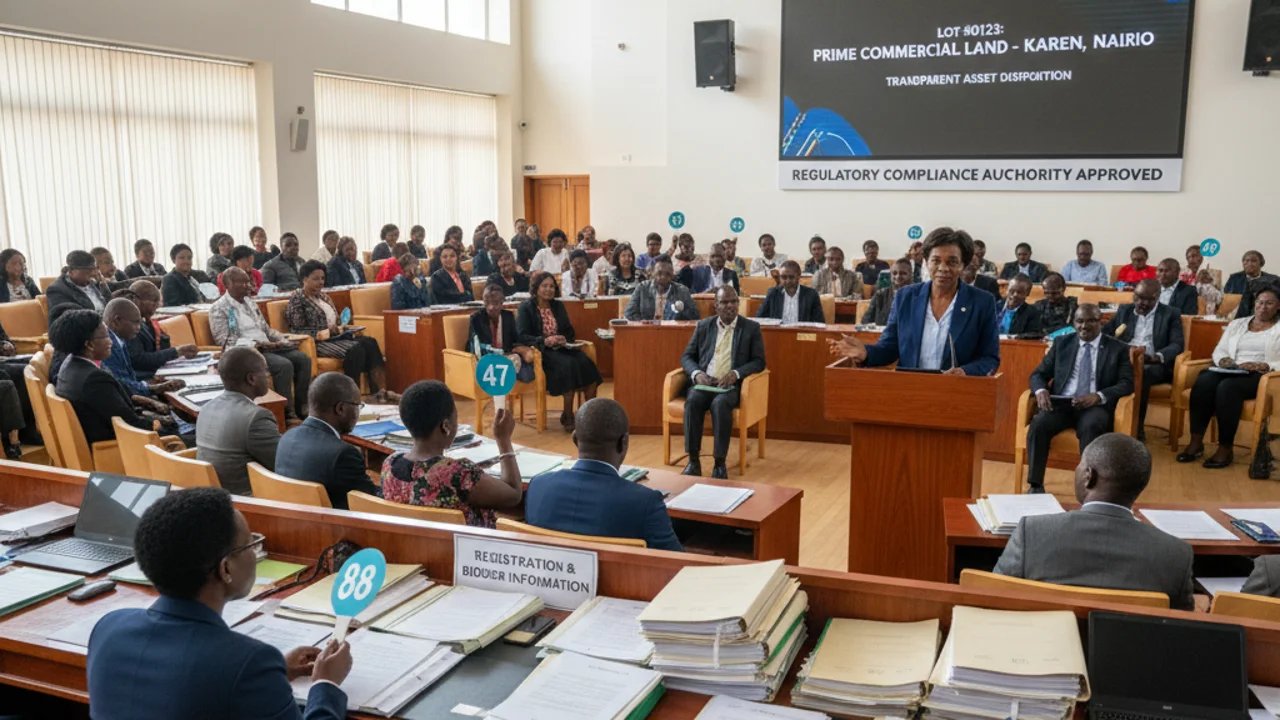
Initiating an auction in Kenya involves a structured sequence of actions. First, a formal instruction is received, often accompanied by relevant documentation such as title deeds, court orders, or inventories of goods. This is followed by a thorough valuation of the assets to be auctioned, ensuring a realistic reserve price is set. The next critical step is the mandatory advertisement phase. This typically involves placing notices in at least two local daily newspapers of wide circulation, specifying the date, time, and venue of the auction, along with a detailed description of the items. Public engagement is further encouraged through pre-auction viewing opportunities, allowing prospective buyers to inspect the items. On the auction day, the auctioneer will conduct the sale, calling for bids and awarding the property to the highest bidder. Once a bid is accepted, a deposit is usually required on the spot, with the balance payable within a stipulated period, often 30 days, as per the sale agreement. The final step involves the execution of sale documents and, where applicable, registration of the transfer of ownership, a process facilitated by our team at Swipe Recoveries Experts Ltd to ensure a smooth transition.
Debt Recovery & Auctioneering Coverage in Kenya
Swipe Recoveries Experts Ltd provides commercial recovery, skip tracing, and auctioneering services across Kenya and all 47 counties in Kenya.
Costs, Fees, and Engaging an Auctioneer

Understanding the costs associated with an auction is essential for planning. Auctioneers' fees in Kenya are regulated and typically charged as a percentage of the sale price or a fixed fee, depending on the nature of the assets and the agreement. For movable properties, fees might range from 10% to 20% of the sale price, while for immovable properties, they are generally lower, often around 5% to 10%. These fees are usually paid by the seller, but arrangements can sometimes be made for the buyer to cover a portion. Beyond auctioneer fees, there may be costs for advertising (typically KES 5,000 - KES 15,000 per publication), valuation, and transportation of goods if applicable. It is prudent to obtain a detailed breakdown of all anticipated charges upfront from your chosen auctioneer. Swipe Recoveries Experts Ltd provides transparent fee structures, ensuring no hidden costs, and works within your budget to maximise returns. We believe in offering competitive rates, with typical sale commissions for movable assets ranging from 12% to 18% and for immovable assets from 6% to 8% of the realised price, subject to the specifics of each engagement.