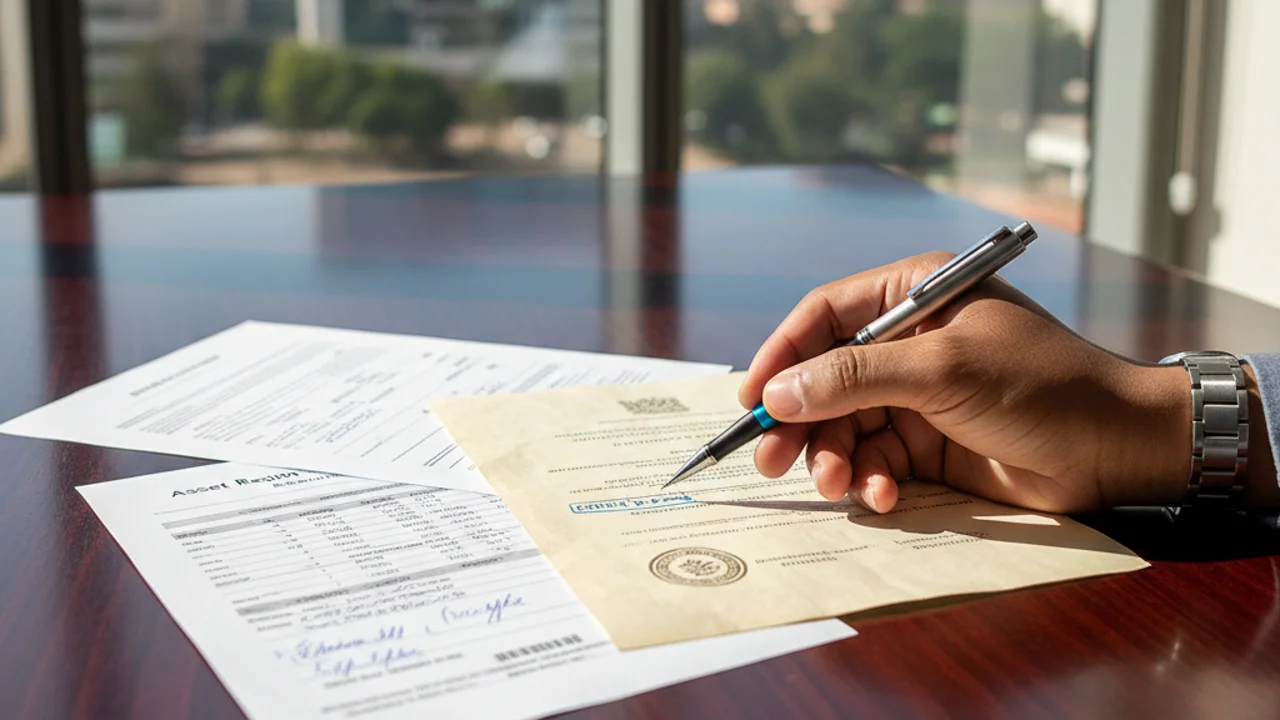
Understanding the Auction Procedure for Kenya Banks
For financial institutions and those interested in understanding debt recovery mechanisms, the auction procedure Kenya banks follow is a meticulously structured legal process. This procedure is designed to enable banks to recover non-performing loans by selling charged assets, primarily land and buildings, through public auctions. Comprehending each stage, from initial default to the final transfer of ownership, is crucial for both compliance and effective participation. Swipe Recoveries Experts Ltd specializes in streamlining this complex process, ensuring adherence to statutory requirements and maximizing recovery rates for our banking partners across Kenya.
Pre-Auction Legal Steps for Banks in Kenya
Before any auction procedure Kenya banks can initiate, a series of stringent legal steps must be completed. Upon a borrower's default, the bank (chargee) first issues formal demand letters. Crucially, this is followed by mandatory statutory notices under the Land Act, Cap 280. Initially, a 90-day notice under Section 90(1) informs the chargor of the default and the bank's intention to exercise its power of sale if the default is not remedied. If the default persists, a further 40-day notice under Section 96(2) is issued, explicitly stating the intention to sell the charged property by public auction. Strict adherence to these timelines and notification requirements is paramount, as any procedural flaw can render the subsequent sale invalid. Banks also engage licensed valuers, regulated by the Valuers Act, Cap 532, to determine the property's forced sale value, a critical step before the auction stage. Swipe Recoveries Experts Ltd guides banks through these pre-auction legalities, ensuring full compliance and robust protection against legal challenges.

The Public Auction Process and Regulations in Kenya
Once the pre-auction legal steps are exhausted, the auction procedure Kenya banks then transitions to the public sale. The bank appoints a licensed auctioneer, whose conduct is governed by the Auctioneers Act, Cap 526, and the Auctioneers Rules. The auctioneer is responsible for extensively advertising the property for sale. This advertisement must appear in at least two widely circulating national newspapers, such as the Standard and Daily Nation, at least 14 days before the auction date, as per legal stipulations. During the auction, potential buyers register and are often required to pay a non-refundable entry fee or a refundable deposit to participate. Properties are typically sold to the highest bidder above a disclosed or undisclosed reserve price, with the auctioneer declaring the successful bidder once the hammer falls. Transparency and fairness are central to this stage, with clear rules on bidding, minimum bids, and payment terms communicated to all participants. Swipe Recoveries Experts Ltd works closely with auctioneers to ensure these procedures are flawlessly executed.
Debt Recovery & Auctioneering Coverage in Kenya
Swipe Recoveries Experts Ltd provides commercial recovery, skip tracing, and auctioneering services across Kenya and all 47 counties in Kenya.
Post-Auction Actions and Financial Implications

The conclusion of the auction procedure Kenya banks involves several critical post-auction steps and financial considerations. The successful bidder is typically required to pay an immediate deposit (e.g., 25% of the purchase price) on the day of the auction, with the remaining balance due within a specified period, usually 90 days. Upon full payment, the chargee (bank) issues a certificate of sale, which facilitates the transfer of ownership to the new buyer. The buyer is then responsible for paying stamp duty, as governed by the Stamp Duty Act, Cap 480 (e.g., 4% for urban property, 1% for agricultural land), and registration fees at the relevant Lands Registry. The proceeds from the sale are used to settle the outstanding debt, interest, and auction-related costs. Any surplus is remitted to the chargor, while a deficit may still be pursued by the bank. For a KES 7,000,000 property, stamp duty alone could be KES 280,000. Swipe Recoveries Experts Ltd offers comprehensive support to ensure timely payments and proper transfer of title, safeguarding the interests of all parties involved.