Understanding Loan Asset Repossession in Kenya
Loan asset repossession is a critical process for lenders and financial institutions in Kenya to recover secured collateral when borrowers default on their loan obligations. This involves the lawful seizure of assets, such as vehicles, machinery, or even household goods, which were pledged as security against a loan. The process is governed by specific legal frameworks to ensure fairness and compliance. Navigating these legalities requires expert knowledge and adherence to strict protocols to avoid disputes and ensure a smooth recovery. Swipe Recoveries Experts Ltd specializes in providing professional, efficient, and legally compliant loan asset repossession services from our base at International Life Hse, 8th Floor, Mama Ngina Street, Nairobi.
Legal Frameworks for Loan Asset Repossession in Kenya
The execution of loan asset repossession in Kenya is strictly controlled by a robust legal framework designed to protect both the lender's rights and the borrower's due process. Key legislation includes the Hire Purchase Act (Cap 507), which governs agreements where goods are acquired on credit and ownership transfers upon final payment. For other types of secured loans, the Chattels Transfer Act (Cap 28) and provisions within the Companies Act, 2015, and Insolvency Act, 2015, are relevant, particularly concerning charges over movable assets. Additionally, the Auctioneers Act (Cap 526) regulates the conduct of licensed auctioneers who carry out the physical repossession.
Lenders must issue prescribed statutory notices of default, such as a 21-day demand notice under the Hire Purchase Act or a 40-day notice for other secured transactions, allowing the borrower an opportunity to remedy the default. Failure to adhere to these notice periods can render the repossession unlawful, leading to significant legal repercussions for the lender. Working with a knowledgeable partner like Swipe Recoveries Experts Ltd ensures strict compliance with these legal requirements, safeguarding the integrity of the repossession process and protecting our clients from legal liabilities.

The Step-by-Step Process of Loan Asset Repossession
The process of loan asset repossession initiated by Swipe Recoveries Experts Ltd in Nairobi is methodical and legally compliant. It typically begins with the lender instructing us after the borrower has failed to remedy a default following the expiry of all statutory notices. Our first step involves meticulous skip tracing and asset verification to locate the collateral. This includes leveraging advanced tools and local intelligence to ensure the asset's presence and condition before repossession.
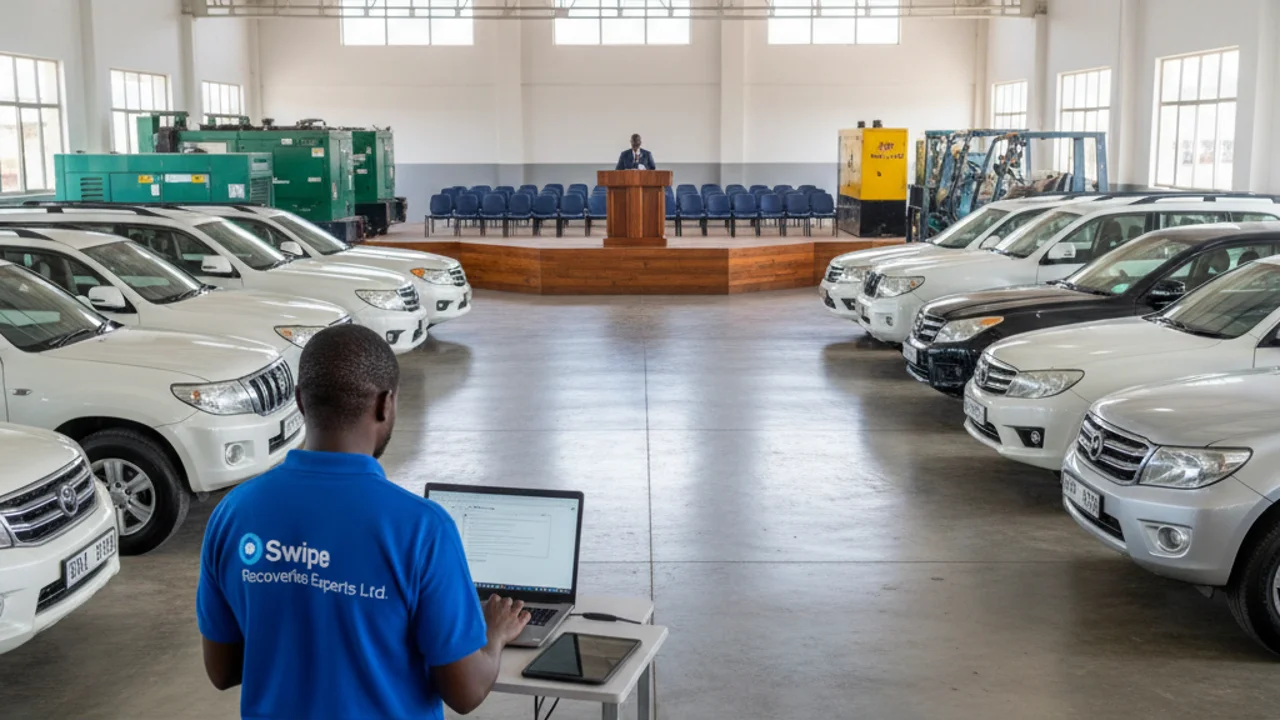
Once the asset is located, a licensed auctioneer, mandated by law, proceeds with the physical repossession. This is often done under a court order, especially if resistance is anticipated, or through lawful distraint. A detailed inventory (proclamation) of the repossessed asset is taken, and a copy provided to the borrower. The asset is then secured and safely transported to a designated storage facility. Following repossession, a 14-day redemption notice is issued, allowing the borrower a final opportunity to settle the outstanding debt and reclaim the asset. If the debt remains unpaid, the asset is then prepared for public auction, conducted by a licensed auctioneer in accordance with the Auctioneers Act, to realize the outstanding loan amount. Our team at International Life Hse, Mama Ngina Street, manages this complex process efficiently.
Cost Implications & Practical Considerations for Loan Asset Repossession

The costs associated with loan asset repossession are primarily borne by the lender, though some may be recoverable from the debtor's account post-sale of the asset. These costs include professional fees for the repossession agent/auctioneer, storage fees for the repossessed asset, and legal fees if a court order is required. Auctioneer fees for repossession are regulated under the Auctioneers Act and typically involve a percentage of the value of the asset repossessed, often capped, for instance, KES 50,000 for vehicles up to KES 10 million. Storage fees can range from KES 1,000 to KES 5,000 per day depending on the asset's size and type.
Practical considerations for lenders include maintaining accurate records of loan agreements and collateral, issuing timely and correct statutory notices, and engaging reputable, licensed professionals. Attempting self-repossession can lead to legal issues such as breach of peace charges. Swipe Recoveries Experts Ltd provides a transparent breakdown of all costs and ensures strict adherence to legal and ethical standards throughout the repossession process. Our efficient service minimizes potential losses and ensures a swift return of capital for financial institutions in Nairobi.