Unpacking the Financial Aspects of Asset Repossession in Kenya
Understanding the various components of Kenya repossession costs is crucial for creditors seeking to recover secured assets following a default. Asset repossession is a critical legal process undertaken when a borrower fails to meet their obligations under a secured loan agreement, such as a chattel mortgage or hire purchase. These costs encompass a range of fees, from legal and auctioneering charges to storage and transportation expenses. Swipe Recoveries Experts Ltd provides transparent and detailed insights into these costs, ensuring our clients in Kenya can make informed decisions about pursuing repossession, guided by adherence to acts like the Hire Purchase Act Cap 507 and the Movable Property Security Rights Act 2017.
Statutory Framework and Key Players in Asset Repossession
Asset repossession in Kenya is governed by specific statutory frameworks designed to protect both the secured creditor and the defaulting debtor. The primary legislation includes the Hire Purchase Act, Cap 507, which outlines the rights and obligations for goods acquired under hire purchase agreements. For other types of movable property used as collateral, the more recent Movable Property Security Rights Act, 2017, provides a comprehensive legal regime for creating, perfecting, and enforcing security interests. These acts specify the procedures that must be followed, including the issuance of statutory notices before repossession can occur. For instance, the Hire Purchase Act requires a default notice and a specified period for the hirer to remedy the breach before the owner can repossess.
Key players in the repossession process include licensed auctioneers, whose activities are regulated by the Auctioneers Act, Cap 526, and their remuneration by the Auctioneers Rules. These professionals are authorized to seize and sell movable assets after due process. Legal counsel is also indispensable for ensuring compliance with all statutory requirements, obtaining necessary court orders (e.g., for vehicles registered with the NTSA, a court order may be required even after a notice of default if the debtor resists), and handling any legal challenges. Swipe Recoveries Experts Ltd works closely with reputable auctioneers and legal experts, ensuring that every repossession is conducted efficiently, legally, and ethically, minimizing risks and maximizing recovery for our clients across Kenya.

The Repossession Process and Associated Requirements
The asset repossession process in Kenya follows a series of mandatory steps to ensure legal compliance. It typically begins with the issuance of a default notice to the borrower, informing them of the breach and providing a grace period (e.g., 21 days under the Hire Purchase Act) to rectify the default. If the default persists, a statutory notice of intention to repossess is then served. Only after these notices have been duly served and the grace periods elapsed can physical repossession commence. This often involves engaging a licensed auctioneer who, in adherence to the Auctioneers Act, Cap 526, will seize the asset. For assets like vehicles, coordination with authorities such as the National Transport and Safety Authority (NTSA) may be necessary to facilitate the transfer of ownership post-sale.
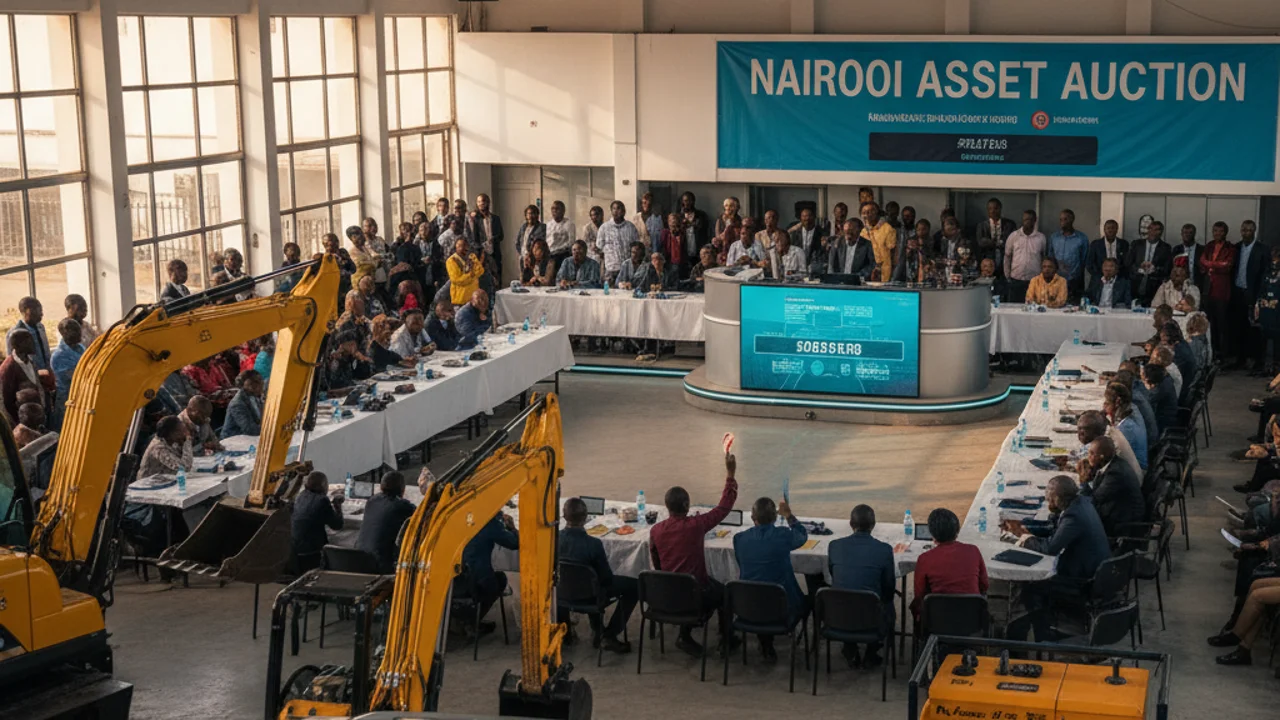
Once repossessed, the asset is usually moved to a secure storage facility. A valuation of the asset is then conducted by a qualified valuer to determine its fair market price. Subsequently, the asset is advertised for sale, typically through public auction. All proceeds from the sale are used to offset the outstanding debt, with any surplus returned to the debtor and any shortfall remaining as an unsecured debt. Documentation required throughout includes the loan/hire purchase agreement, default notices, statutory notices, valuation reports, and court orders where applicable. Swipe Recoveries Experts Ltd meticulously manages this entire procedure, ensuring every requirement is met for a smooth and legally sound repossession.
Debt Recovery & Auctioneering Coverage in Kenya
Swipe Recoveries Experts Ltd provides commercial recovery, skip tracing, and auctioneering services across Kenya and all 47 counties in Kenya.
Detailed Breakdown of Kenya Repossession Costs

Understanding the specific components of Kenya repossession costs is vital for transparent financial planning. The primary costs include legal fees for drafting and serving notices, which can range from KES 15,000 to KES 40,000. Court filing fees, if a court order is required for repossession or sale, depend on the asset's value but typically start from KES 5,000. The most significant cost often comes from the auctioneer's commission, which is legally stipulated by the Auctioneers Rules. For motor vehicles, this can be 5% of the first KES 100,000 and 2.5% on the excess, plus a small VAT component. For other goods, it might be a fixed percentage or based on the sale value.
Additional expenses include transportation costs for moving the repossessed asset (variable, depending on distance, e.g., KES 5,000 - KES 20,000 within Nairobi), storage fees (ranging from KES 1,000 to KES 5,000 per day, depending on the asset's size and facility), and valuation fees (typically 0.5% - 1% of the asset's value). Advertising costs for the auction are also incurred. Swipe Recoveries Experts Ltd provides a detailed and transparent breakdown of all anticipated repossession costs in KES upfront, allowing clients to assess the economic viability of the recovery process. Our aim is to ensure cost-efficiency and maximum net recovery.