Recovering Assets from Private & Commercial Disputes
Effective private asset repossession requires a unique blend of legal acumen, investigative skill, and discreet execution. Unlike standard bank repossessions, private cases often arise from complex situations such as defaulted personal loans between individuals, business partnership disputes, or breached rental/lease agreements for high-value equipment. These scenarios demand a sophisticated approach to ensure the recovery is not only successful but also legally airtight. Swipe Recoveries Experts Ltd, based at International Life House in Nairobi, specializes in navigating these intricate cases. We provide a confidential, strategic, and compliant service to help individuals and businesses recover what is rightfully theirs, mitigating risk and maximizing the chances of a positive outcome.
Legal Frameworks Governing Private Repossession in Kenya
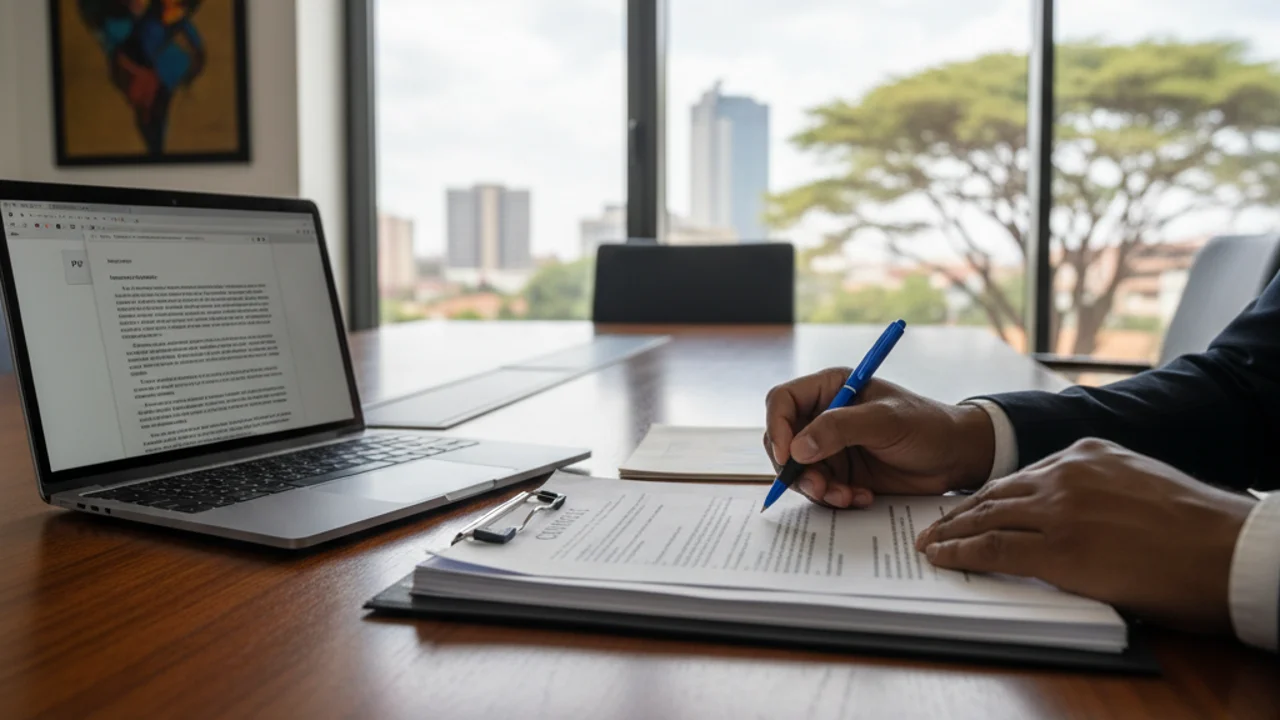
The legal authority for private asset repossession is grounded in Kenya's laws of contract and property. The primary document is the agreement signed between the parties. For instance, the Hire-Purchase Act (Cap 507) governs the repossession of goods bought on hire purchase, stipulating specific conditions, especially for protected goods where a significant portion of the price has been paid. For assets secured against a private loan, a well-drafted loan agreement with a clear repossession clause is essential. If no such formal security (like a chattel mortgage) exists, repossession becomes more complex and almost always requires a court order. Attempting a 'self-help' repossession without clear contractual rights or a court order is extremely risky and can expose the creditor to civil suits for conversion or trespass, and even criminal charges. The Contract Act and the Civil Procedure Code provide the framework for seeking legal redress through the courts, such as obtaining an order for the seizure and preservation of the asset pending the resolution of the dispute. Our legal team meticulously reviews each case to determine the most viable and legally sound path to recovery.
The Professional Process for Repossessing Private Assets
Our process for private asset repossession is designed for precision and legal compliance. It begins with a confidential consultation and an in-depth review of all documentation to verify the legal right to repossess. This is the most critical step to ensure the entire operation is lawful.
Once the legal basis is established, we typically proceed by issuing a formal Letter of Demand to the individual or entity in possession of the asset. This formal step often prompts a resolution without further action. If the demand is ignored, our specialized skip tracing division takes over. Using a combination of advanced database searches, open-source intelligence (OSINT), and discreet field inquiries, we locate both the debtor and the asset. This is crucial as assets in private disputes are often intentionally concealed.
The recovery operation itself is planned with military-style precision. Our field agents, who are licensed and trained in de-escalation, execute the repossession at a time and place that minimizes risk and public visibility. Every step is meticulously documented with time-stamped photos and reports to create an unassailable evidence trail for any potential legal proceedings. The recovered asset is then transported to a secure facility.
What Does Private Asset Repossession Cost in Kenya?

The costs for private asset repossession are bespoke and depend entirely on the specifics of the case. Unlike institutional repossessions, private cases often involve greater complexity. Key factors influencing the cost include the value and type of the asset, the difficulty in locating it (intensity of skip tracing required), and whether court action is necessary. A straightforward recovery based on a clear contract might be charged on a success-based commission (a percentage of the asset's value) plus direct costs.
A more complex case requiring extensive surveillance or legal work might involve different fee structures. This could include an initial retainer fee, hourly rates for investigative or surveillance work (e.g., KES 2,000 - KES 5,000 per hour), and fixed fees for court filings or legal opinions. Direct costs such as towing, storage, and locksmith services are billed at cost. We provide a detailed and transparent fee proposal after our initial case assessment, ensuring clients have a clear understanding of the potential investment required to recover their asset.